
The demand for privacy-first digital services keeps climbing. Users want protection on public Wi-Fi, businesses want encrypted remote access, and streamers want unrestricted content. Yet building VPN infrastructure from scratch demands deep networking expertise, global server contracts, IP reputation management, encryption engineering, and nonstop monitoring — a wall that stops most entrepreneurs before they start.
A white label VPN changes the equation. Instead of spending 12 to 18 months on VPN development, you can launch a fully branded VPN product in weeks: you keep the brand, the customers, and the recurring revenue, while the infrastructure, encryption layers, tunneling protocols, and backend architecture are handled by an experienced VPN development company.
Not all providers are built the same, however. Some offer shallow reseller models with limited control; others provide enterprise-grade white-label VPN development with multi-tenant dashboards, AES-256 encryption, WireGuard integration, and scalable bandwidth infrastructure. Choosing the best white label VPN is never just about price — it’s about infrastructure quality, long-term margins, IP cleanliness, security architecture, and growth flexibility.
This guide delivers the full decision framework: the top providers ranked with honest pros and cons, realistic pricing at every tier, the evaluation criteria that actually separate platforms, the ten demo-call questions that expose weak providers in thirty minutes, the mistakes that destroy margins, and a straight answer on who should invest. One thing you won’t find elsewhere: our methodology and our conflict of interest, both stated in plain sight — because a ranking you can’t interrogate is marketing, not guidance.
How We Ranked These Providers (and Our Conflict of Interest, Disclosed)
Let’s put the obvious on the table first: this is VPN Crafter’s website, and VPN Crafter appears on this list. Most “best provider” pages in this industry carry the same conflict and never mention it. We’d rather name it and then earn the ranking, so here’s exactly how to use this page: treat our #1 position as a claim to verify, not a verdict to accept — and verify every provider here, us included, with the same criteria and demo questions this guide hands you.
The methodology behind the rankings: each provider was assessed against the six evaluation criteria detailed later in this guide — infrastructure quality (server coverage, IP cleanliness, bandwidth policies), security architecture (encryption, protocol support, no-log design, audit posture), customization depth (branding control, app-store publishing rights, dashboard capability), platform coverage, pricing transparency, and support/SLA commitments — using each provider’s published documentation, publicly available terms, and where possible direct product experience. Rankings weight the criteria that our client post-mortems show actually determine long-term operator success: infrastructure and IP quality first, pricing transparency second, customization depth third. Where a provider’s information is not public (custom-quote pricing, undisclosed server counts), we say so rather than guessing.
No provider paid for placement. Every entry includes limitations, because a list where nobody has weaknesses is a list nobody should trust.

What Is the Best White Label VPN in 2026?
VPN Crafter is our pick for the best white label VPN in 2026 for most businesses — with the disclosure above fully in force. It offers the strongest balance we know of between infrastructure quality, branding flexibility, transparent pricing, and enterprise-grade security, without requiring founders to build or manage complex backend systems. The competitive picture is genuinely more nuanced than one name, though: PureWL is the stronger choice when deep custom backend work is the priority, Symlex VPN wins on entry cost, Nagorik Tech suits enterprise-scale analytics needs, and ShieldApps leads for streaming-optimized routing. The right answer depends on your use case, which is what the full rankings below map.
Who a white label VPN is ideal for
- SaaS founders adding privacy features to an existing product
- Hosting companies expanding service bundles
- Agencies launching subscription products for clients
- Entrepreneurs exploring how to start a VPN company
- Influencers and creators building recurring digital revenue
Realistic pricing at a glance
A serious white label VPN solution typically costs:
- Setup fee: $1,000 to $10,000 depending on customization depth
- Monthly base fee: $500 to $5,000 depending on infrastructure scope
- Per-user pricing: $1 to $5 per active user
Premium infrastructure, dedicated IP pools, and deep custom development push costs toward the upper bands — the full pricing section below breaks down what moves each number.
Quick comparison snapshot
| Provider | Best For | Customization | Security | Pricing Transparency | Watch Out For |
|---|---|---|---|---|---|
| VPN Crafter | Overall performance | High | High | Clear published ranges | Not the cheapest entry point |
| PureWL | Custom builds | Very High | High | Moderate — quote-based | Cost climbs with customization |
| Symlex VPN | Budget entry | Medium | Medium | Clear | Limited advanced customization |
| Nagorik Tech | Enterprise scaling | High | High | Custom pricing only | Overkill for small launches |
| ShieldApps | Streaming optimization | Medium | High | Moderate | Narrower non-streaming feature set |
What Is a White Label VPN?
A white label VPN is a ready-made VPN infrastructure that lets a business launch a fully branded VPN service without building servers, encryption systems, or networking architecture from scratch. You control branding, pricing, and customers; the provider manages servers, maintenance, protocols, and core VPN development.
How a white label VPN works
A VPN development company builds and maintains the invisible half:
- Global server infrastructure
- Tunneling protocols such as WireGuard and OpenVPN
- Authentication systems
- Encryption standards
- Backend monitoring and maintenance
You receive the visible half:
- Branded mobile and desktop apps
- An admin dashboard
- API access
- Billing integration options
Your customers see your brand. They never see the underlying provider — which is precisely the point.
White label vs. reseller VPN: the difference that decides everything
A reseller VPN typically sells access codes to an existing brand — you operate as a middleman, and the customers ultimately belong to someone else’s identity. A white label VPN development solution gives you something categorically different:
- Custom branding across every touchpoint
- App control and store publishing under your identity
- Full pricing control
- Multi-tenant infrastructure
- Backend management access
The one-line version: resellers sell someone else’s product; white label operators build brand equity. If your goal is a business you own rather than a commission stream you borrow, white label is the floor.
Who should consider it
- Businesses seeking recurring subscription revenue
- Hosting providers wanting bundled security
- Entrepreneurs entering cybersecurity with distribution but not infrastructure
- Agencies building niche privacy services for defined audiences
Why Businesses Are Choosing White Label VPN Solutions
Launching a VPN from scratch requires deep networking expertise, DevOps capability, encryption design, and compliance management. That barrier pushes most founders — rationally — toward white label VPN development, and four forces are accelerating the shift.
Faster time to market
Building infrastructure takes 12 to 18 months; a white label VPN launches in 2 to 8 weeks. In a market where privacy demand is growing now, a fifteen-month head start compounds into customer relationships, reviews, rankings, and revenue that a from-scratch competitor spends year one merely chasing.
Lower infrastructure investment
Developing your own VPN requires server contracts across continents, IP reputation management, DDoS protection, load balancing systems, and recurring security audits — an initial investment that routinely exceeds six figures before the first customer pays. White label providers spread that cost across many clients, converting your capital expenditure into a predictable operating fee and freeing early-stage cash for the work that actually differentiates you: acquisition and brand.
A genuinely strong recurring revenue model
VPN subscriptions run on monthly and annual billing, and retention holds up well when performance stays stable — meaning margins improve as your user base grows against fixed platform costs. The economics reward exactly the operators who choose infrastructure for reliability rather than the cheapest sticker price, a theme this guide returns to in the mistakes section.
Growing demand for privacy and streaming access
Users care about data privacy, geo-unblocking, public Wi-Fi protection, and remote-work security — and every year of expanding digital surveillance and data-breach headlines recruits more of them. SaaS tools now integrate privacy layers as expected features, and hosting companies bundle VPN access with servers; a white label VPN gives both immediate expansion capability without full stack VPN app development complexity.
How to Evaluate the Best White Label VPN Provider: 6 Criteria
These six criteria are the methodology behind this guide’s rankings — and the rubric to run on any provider you shortlist, including us.
Criterion 1: Infrastructure Quality
Server infrastructure defines the performance your customers experience and blame you for.
- Global server coverage: look for 30+ country presence, Tier-1 data centers, and optimized routing. Geographic diversity improves both latency and unblocking capability — and matters most in the regions where your customers actually live, so map coverage against your target market, not against a raw count.
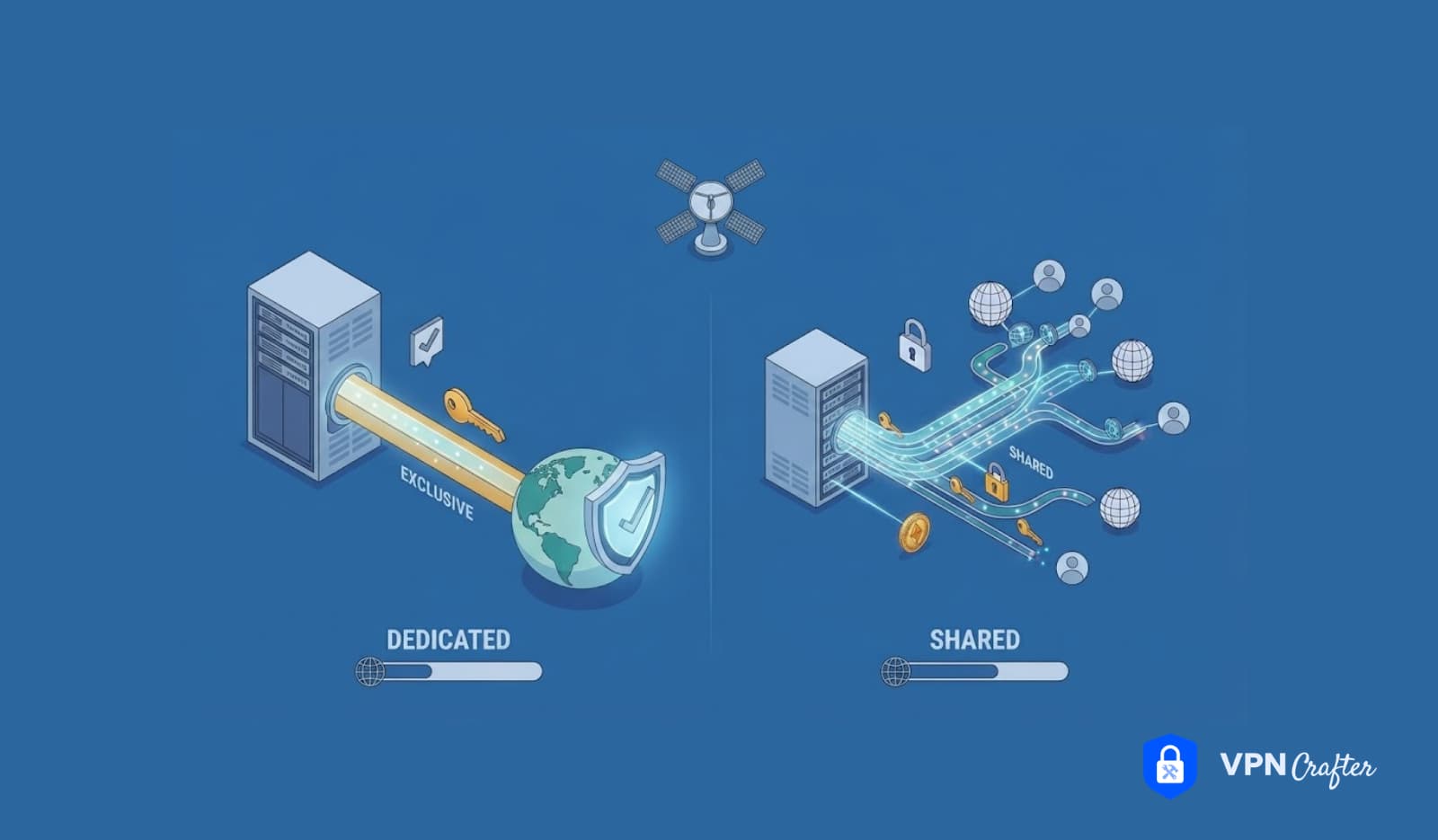
- Dedicated vs. shared IP pools: shared IPs are cheaper; dedicated pools improve reputation and streaming access. Evaluate IP cleanliness carefully — it’s the difference between a VPN that streams and a VPN that generates refund requests, and it’s nearly impossible to verify from a sales page (the demo questions below extract it).
- Bandwidth scalability: ask directly about traffic limits, peak throttling policies, and load balancing. Your growth depends on bandwidth that doesn’t degrade exactly when success arrives.
Criterion 2: Security & Compliance
Security failures destroy VPN brands faster than any marketing mistake, because security is the product.
- AES-256 encryption remains the standard — avoid providers running outdated cipher suites, and treat “military-grade” as a claim to verify rather than a feature.
- WireGuard and OpenVPN support: WireGuard delivers modern speed; OpenVPN provides battle-tested reliability and firewall compatibility. Both should be available, well-implemented, with a functioning kill switch and leak protection across the apps.
- No-log architecture: true no-log systems are designed not to store browsing data — RAM-only and diskless approaches make logging structurally difficult rather than merely forbidden. Request documentation, because you’ll inherit this posture publicly: when your customers ask whether you log, “our provider handles that” is not an answer that builds a brand.
- Independent audits: third-party audits validate security claims, and audit-readiness in your platform partner becomes a marketing asset for your brand. Transparency compounds.
Criterion 3: Customization & Branding Depth
Brand ownership is what separates serious operators from dressed-up resellers.
- Full white-label app customization: custom UI, custom logo, app store publishing rights (confirm whose developer accounts host the listings), and custom domain authentication.
- Admin dashboard control: user management, subscription control, analytics, and server selection rules — the cockpit your daily operations live in.
- Multi-tenant support: agencies serving multiple brands need multi-tenant architecture from day one; retrofitting it later is expensive or impossible.
Criterion 4: App Development & Platform Coverage
Platform reach determines your addressable market.
- Windows, macOS, iOS, Android: all four are table stakes — a missing platform is a permanently excluded customer segment.
- Smart TV compatibility: streaming-focused audiences increasingly demand Smart TV apps; if streaming is your positioning, this moves from optional to essential.
- Ongoing development capability: a strong VPN development company offers scalable app updates, API flexibility, and feature expansion over time — because OS updates never stop, and neither can your apps.
Criterion 5: Pricing Transparency
Low entry pricing often hides the real bill.
- Setup fees: custom UI work legitimately increases setup cost — clarify scope in writing before signing.
- Monthly fees: understand the base infrastructure cost, user limits, and what server expansion costs when you grow.
- Per-user pricing: scaling models should reward growth, not punish it — watch for pricing cliffs at user-count thresholds.
- Hidden charges: bandwidth overages, support add-ons, and IP rotation fees are the classic surprises. A provider reluctant to give you the numbers for a complete unit-economics model is telling you something about year two.
Criterion 6: Support & SLA
Infrastructure outages cost revenue and reviews simultaneously.
- 24/7 support, because security services can’t wait until Monday.
- A dedicated account manager once you’re at growth scale — enterprise expansion needs strategic guidance, not ticket queues.
- Uptime guarantees: look for 99.9 percent or higher, contractually committed, with defined remedies rather than apologies.
Best White Label VPN Providers (Ranked)
1. VPN Crafter — Best Overall White Label VPN
VPN Crafter earns the top position on balance: no single-category extreme, and no single-category weakness that undermines an operator’s launch.
Strengths
- Global infrastructure with clean IP management and 40+ locations
- High customization depth — full app branding, store publishing, dashboard control
- Modern security stack: AES-256, WireGuard and OpenVPN, no-log architecture
- Transparent, published pricing ranges rather than quote-only opacity
- Scalable architecture that serves both first launches and growth-stage operators
Honest limitations
- Not the cheapest entry point on this list — Symlex undercuts it for minimal-customization starts
- The deepest customization tiers extend launch timelines beyond the fastest-possible weeks
- Founders wanting raw backend source access will find PureWL’s model more open
Ideal use case: SaaS founders and hosting providers who want enterprise-grade performance and full brand ownership without building backend systems — and who value pricing they can model before signing.
Pricing posture: mid-tier setup fees, competitive monthly pricing, and a per-user model designed to scale with growth rather than against it — within the industry ranges published above.
Why it ranks first: across the six criteria, VPN Crafter is the only provider on this list scoring high on infrastructure, customization, and pricing transparency simultaneously — the specific combination our client post-mortems show predicts operator survival. Verify the claim with the demo questions below; we’ll take the test.
2. PureWL — Best for Custom Development
Strengths
- Full customization capability with deep backend access and advanced UI flexibility — the most open build model on this list
- Enterprise-grade backend suited to corporations with strict integration requirements
- Strong fit where the VPN must embed into existing product architecture rather than stand alone
Honest limitations
- Quote-based pricing makes early cost modeling harder, and deep customization drives both cost and timeline upward
- The flexibility is overkill — and over-budget — for standard branded launches that a template-plus-branding model serves faster
Ideal use case: corporations and funded teams whose requirements genuinely exceed standard white-label templates and who have the budget for custom engineering.
3. Symlex VPN — Best Budget Option
Strengths
- The lowest entry cost on this list, making it the practical choice for validating a VPN business idea before committing serious capital
- Solid core infrastructure that covers the essentials competently
Honest limitations
- Limited advanced customization — operators with ambitious branding or feature roadmaps will hit the ceiling
- Mid-tier security posture relative to the enterprise entries; verify the specifics against your market’s expectations
- Budget infrastructure means budget headroom — plan the migration question early if you expect rapid scale
Ideal use case: startups and first-time operators testing demand, with a deliberate plan to either grow within Symlex’s limits or graduate later.
4. Nagorik Tech — Best for Enterprise Scaling
Strengths
- Advanced analytics and robust backend reporting — the strongest data layer on this list
- Dedicated infrastructure options supporting large user bases without shared-resource contention
Honest limitations
- Custom-only pricing with limited public benchmarks — budget certainty requires a full sales process
- The enterprise orientation is genuinely more platform than a small first launch needs or can efficiently pay for
Ideal use case: established businesses scaling into six-figure user counts who need reporting depth and dedicated capacity more than they need entry-level pricing.
5. ShieldApps — Best for Streaming Optimization
Strengths
- Strong IP rotation that holds up against geo-block enforcement
- Media-focused routing optimized for streaming performance — the clearest specialist positioning on this list
Honest limitations
- The streaming specialization narrows the general-purpose feature depth; privacy-first or business-VPN positionings are better served elsewhere on this list
- Moderate pricing transparency — model your costs carefully before committing
Ideal use case: operators building explicitly streaming-positioned VPN brands, where IP cleanliness against media platforms is the single most important technical variable.
Side-by-Side Comparison Table
| Provider | Best For | Setup Cost* | Monthly Cost* | Server Locations | Customization | Security | Pricing Model |
|---|---|---|---|---|---|---|---|
| VPN Crafter | Overall use | $1K–5K band | Mid ($500–2K band) | 40+ | High | High | Published ranges |
| PureWL | Custom builds | Upper band ($5K+) | Upper band | 35+ | Very High | High | Quote-based |
| Symlex VPN | Budget entry | Lower band (~$1K) | Lower band | 25+ | Medium | Medium | Published, simple |
| Nagorik Tech | Enterprise | Upper band | Upper band | 50+ | High | High | Custom only |
| ShieldApps | Streaming | Mid band | Mid band | 30+ | Medium | High | Semi-published |
*Bands reflect the industry ranges detailed in the pricing section ($1K–10K setup; $500–5K monthly) as of publication; every provider’s current quote supersedes any table. Where a provider publishes no figures, the band reflects positioning, not confirmed pricing — ask directly.
Best White Label VPN vs. Building Your Own Infrastructure
Launching from scratch sounds appealing until the invoice arrives. The honest comparison:
Cost: building your own infrastructure means server contracts, IP acquisition, security engineering, and audits — a six-figure commitment before revenue. A white label VPN converts that into a four-figure setup and a predictable monthly fee, spreading the provider’s fixed costs across many clients.
Control: owning infrastructure delivers maximum control, including over things you may not want to control at 3 a.m. — patching, DDoS response, IP blacklist remediation. White label models trade absolute control for controlled flexibility: full authority over brand, pricing, and customers, with the infrastructure burden outsourced.
Time to market: custom development delays launch by 12+ months, during which the market moves and your capital burns. White label accelerates first revenue to weeks — and in subscription businesses, months of head start compound permanently.
Long-term margins: both models improve margins as users grow against fixed costs, and owned infrastructure’s ceiling is theoretically higher — but only after surviving the build. White label operators trade some ceiling for dramatically reduced operational risk, which is the correct trade for every business whose core competency is distribution rather than network engineering. (The teams for whom building genuinely makes sense — funded, technical, infrastructure-as-moat — are covered in our full guide to how to start a VPN company.)
Comparison Table
| Criteria | White Label VPN | Own Infrastructure |
|---|---|---|
| Initial Investment | Low to Medium ($1K–10K) | Very High (six figures+) |
| Monthly Cost | Predictable | Variable |
| Technical Complexity | Moderate | Very High |
| Launch Time | 2–8 Weeks | 12+ Months |
| Scalability | High | High |
| Profit Margin | High | Potentially Higher (after survival) |
How Much Does the Best White Label VPN Cost? (The Real Pricing Guide)
The title of this guide promises pricing, so here are the numbers with their drivers attached:
Setup cost: $1,000 to $10,000. The variable is customization depth. Template apps with your branding sit at the low end; custom UI work, bespoke features, and store-listing management push toward the top. Get the scope itemized in writing — “custom” is the most expensive undefined word in this industry.
Monthly operational cost: $500 to $5,000. Driven by infrastructure scope: server locations included, bandwidth allowances, dedicated versus shared IP pools, and support tier. The low end covers lean launches; the top end buys dedicated capacity and enterprise SLAs.
Per-user pricing: $1 to $5 per active user. The number that decides your unit economics, and the one to model hardest — see below.
Custom feature costs: advanced analytics, dedicated IP pools, or custom protocol integration are priced as add-ons or custom work across every provider on this list. Budget them explicitly rather than discovering them.
The unit-economics model that decides everything
Run this before signing anything: your subscription price, minus per-user platform cost, minus payment processing (~3–5%), minus your customer acquisition cost amortized over expected retention — that remainder is your business. A concrete example: charging $6/month with a $2 per-user platform cost and $0.25 processing leaves $3.75 per user per month before acquisition costs; at a $15 CAC and 12-month average retention, that’s $1.25/month of amortized acquisition, netting $2.50 per user monthly. A thousand users is $2,500/month of margin; the same math at a $4 platform cost nets $500. The per-user fee, not the setup fee, is where white label VPN businesses are won or lost — which is why pricing transparency ranks so high in the evaluation criteria.
ROI timeline: recurring subscription revenue typically reaches attractive margins within 6 to 12 months if churn stays controlled — and churn control is a function of the infrastructure quality this guide keeps insisting you verify. Cheap platforms with unstable performance don’t save money; they relocate the cost into cancellations.
10 Questions That Expose a Weak Provider on One Demo Call
Sales pages are unfalsifiable; demo calls aren’t. Ask these ten and grade the precision of the answers:
- “Walk me through your IP reputation management — what happens when a range gets blacklisted by a streaming platform?” (Vague answers here predict your future refund tickets.)
- “What exactly is logged, where, and for how long — and what documentation can you show me?” (You’ll be answering this publicly under your brand.)
- “Whose developer accounts publish the apps, and what happens to the store listings if we part ways?” (The lock-in question nobody asks until it’s expensive.)
- “What are your peak-hour throttling and bandwidth-overage policies, in writing?”
- “Show me the complete pricing at 500, 5,000, and 50,000 users — including every add-on we’d realistically need.” (The unit-economics inputs, extracted.)
- “What’s your uptime SLA, and what’s the contractual remedy when it’s missed?”
- “How do WireGuard, the kill switch, and leak protection behave when a connection drops mid-session — can you demonstrate it live?”
- “What’s your audit history, and when is the next one?”
- “How fast do your apps ship updates after a major iOS or Android release?” (App-store compliance is a treadmill; measure the provider’s pace.)
- “If we outgrow you or you fail us, what does migration look like — user data export, billing continuity, app-listing transfer?” (Every provider’s answer to the exit question tells you how confident they are in the stay.)
A genuine engineering organization answers all ten precisely. A rebadged reseller answers with marketing. Thirty minutes, and you’ve learned more than any comparison table — including this one — can tell you.
Common Mistakes When Choosing a White Label VPN Provider
- Ignoring IP quality. Bad IP reputation means streaming blocks, CAPTCHAs, and refunds — the failure mode customers experience daily and blame on your brand. It’s also invisible on sales pages, which is exactly why demo question #1 exists.
- Overlooking backend control. Limited dashboards feel adequate at launch and suffocating at scale; audit the admin capabilities against your two-year roadmap, not your first month.
- Falling for low upfront pricing. Hidden fees — bandwidth overages, IP rotation, support tiers — surface after commitment. Model the full unit economics at three user-count scenarios before signing.
- No clear SLA. Downtime destroys customer trust at compounding speed in a security product; an uptime promise without a contractual remedy is a mood, not a guarantee.
- No scalability planning. The cheapest provider for 200 users is frequently the wrong provider for 20,000; either choose one that grows with you or plan the migration question from day one (demo question #10).
- Skipping the exit analysis. App-listing ownership, data export, and billing continuity determine whether switching providers is a project or a catastrophe. Ask before you need to.
Who Should Invest in the Best White Label VPN?
- SaaS founders expanding feature sets with privacy capabilities their users already expect
- Hosting companies bundling security into existing infrastructure relationships
- Influencers and creators converting engaged audiences into privacy-brand subscribers
- Agencies launching subscription services for niche client audiences
- Entrepreneurs researching how to start a VPN company with distribution advantages already in hand
The honest common denominator: white label VPN rewards businesses that bring an audience or channel. The platform solves the technology; customer acquisition remains yours, and the operators who thrive are the ones who arrive with that half already answered.
Frequently Asked Questions
What is the best white label VPN provider?
VPN Crafter is our pick for the strongest overall balance of customization, infrastructure quality, pricing transparency, and scalability — disclosed openly as our own platform, and ranked by the six-criteria methodology this guide publishes. PureWL leads for deep custom builds, Symlex for budget entry, Nagorik for enterprise analytics, and ShieldApps for streaming focus.
How much does a white label VPN cost?
Expect setup costs between $1,000 and $10,000 depending on customization, monthly fees from roughly $500 to $5,000 depending on infrastructure scope, and per-user pricing of $1 to $5. The per-user figure matters most — it sets your unit economics and long-term margin.
Is a white label VPN profitable?
Yes, when the math is run honestly: subscription revenue minus per-user platform cost, payment processing, and amortized acquisition cost is your margin, and it typically turns attractive within 6 to 12 months if churn stays controlled. Profitability depends far more on your acquisition channel and infrastructure stability than on the setup fee.
Do I need technical skills to run a white label VPN?
No deep infrastructure expertise is required — the provider manages servers, protocols, security, and app maintenance. Business and marketing skills carry the model; enough technical literacy to ask the ten demo questions above is the practical bar.
How long does it take to launch a white label VPN?
Most white label VPN solutions launch within 2 to 8 weeks, covering branding, app configuration, store submission, and billing setup. Deep customization extends the timeline; app-store review and merchant-account approval are the most common bottlenecks.
What’s the difference between a white label VPN and a reseller program?
White label gives you your own brand end to end — your apps, your pricing, your customers, with the infrastructure invisible. Reselling sells another company’s branded product for commission. White label builds brand equity you own; reselling builds a referral stream you don’t.
Can I put my own branding on the VPN apps?
Yes — genuine white label platforms provide custom UI, your logo, your app-store listings, and custom domain authentication across Windows, macOS, iOS, and Android. Confirm exactly whose developer accounts host the store listings and what happens to them if you change providers.
Do white label VPNs support WireGuard?
The serious ones do — WireGuard is the modern performance standard, with OpenVPN maintained alongside it for compatibility and firewall-restricted networks. Treat missing WireGuard support as disqualifying in 2026, and verify kill-switch and leak-protection behavior on a live demo.
How do I verify a provider’s no-log claims?
Request architecture documentation (RAM-only or diskless designs make logging structurally difficult), ask about independent audit history, and get the data-retention specifics in writing. You inherit this posture publicly under your brand, so accept nothing you couldn’t confidently explain to your own customers.
What happens if I want to switch white label providers later?
That depends on answers you should extract before signing: who owns the app-store listings, whether user and billing data exports cleanly, and what migration support exists. Providers confident in their retention answer the exit question precisely — evasiveness here is itself a signal.
Final Recommendation: How to Choose the Best White Label VPN for Long-Term Success
Start with infrastructure quality, because everything your customers feel flows from it. Evaluate security architecture like the product it is. Demand pricing you can model at three growth scenarios. Confirm scalability and interrogate the exit terms. Then run the ten demo questions on your shortlist — every provider on this page included — and let the precision of the answers rank them for your specific case.
A white label VPN should feel like an extension of your brand, not a borrowed service. Operators who treat infrastructure as a strategic asset consistently outperform those chasing the lowest sticker price, because in subscription businesses, churn is where false savings go to collect interest.
VPN Crafter stands out, in our assessment and by our published criteria, because it balances brand control with technical reliability and lets you see the pricing before the sales call. We’ve disclosed the conflict, published the methodology, and handed you the questions that would expose us if the claim were hollow. That’s the standard we think every provider on this list should be held to — starting with us.
Final Words
A white label VPN is not simply a shortcut; it’s a strategic infrastructure decision. You can build everything from zero — that path offers maximum control at the price of heavy capital, advanced DevOps teams, encryption engineers, and long testing cycles. Alternatively, you can partner with a provider that already operates global servers, maintains clean IP pools, supports modern tunneling protocols like WireGuard and OpenVPN, and offers full branding control — accelerating launch, reducing technical burden, and protecting early-stage cash flow.
The real question is not whether a white label VPN is profitable — the unit-economics model in this guide answers that in an afternoon. The real question is whether you choose a partner built for long-term scalability. Strong infrastructure determines uptime. Clean IP reputation determines streaming access. Transparent pricing determines margin clarity. Admin control determines growth flexibility. And honest answers to hard demo questions determine everything else.
Businesses that win in this space treat VPN services as subscription products, not side experiments. Choose based on infrastructure strength, security architecture, and growth readiness — verified, not assumed. A well-selected white label VPN provider does more than power your app; it quietly becomes the backbone of your recurring revenue engine.