

VPN app development cost is rarely the simple number founders expect it to be, and that’s precisely why so many first-time buyers get burned by vague agency quotes. Ask ten development shops the same question, and you’ll likely get ten wildly different answers — anywhere from $15,000 for a barebones client app to well over $250,000 for an enterprise-grade, multi-protocol platform with a full reseller infrastructure.
At VPN Crafter, we’ve quoted, scoped, and built VPN applications for founders across the United States, the UK, Germany, France, Spain, Portugal, the Netherlands, Canada, Brazil, India, and Australia, so we’ve seen firsthand why the pricing conversation gets so confusing. This guide exists to fix that. Instead of another generic estimate, you’ll get an honest, itemized breakdown of what actually drives cost — platform choice, protocol stack, backend complexity, monetization features, and ongoing server infrastructure — plus the real numbers our team uses when scoping client projects. By the end, you’ll know exactly what to budget, what to negotiate, and what red flags to avoid before signing a single contract.
Table of Contents
- What Determines VPN App Development Cost
- Average VPN App Development Cost by Project Type
- Platform-Specific Development Costs (Android, iOS, Windows, macOS, Cross-Platform)
- Feature-Based Cost Breakdown
- VPN Server Infrastructure Cost
- VPN App Development Cost by Business Stage
- VPN Developer Hourly Rates by Region
- Hidden Costs Most Founders Forget
- Expert Insights From the VPN Crafter Build Team
- Statistics & Data
- Common Mistakes That Inflate VPN App Development Cost
- Best Practices for Budgeting a VPN App
- Frequently Asked Questions
- Conclusion
- Key Takeaways
What Determines VPN App Development Cost
Before quoting a single dollar figure, it helps to understand the actual cost drivers behind any VPN application. Unlike a typical mobile app, a VPN product isn’t just client-side software — it’s a three-layer system involving a mobile or desktop client, backend infrastructure, and a global server network. Consequently, VPN app development cost is shaped by far more variables than a standard app estimate would suggest.
Generally speaking, five factors move the needle the most:
- Platform scope — building for one OS versus five simultaneously
- Protocol stack — WireGuard alone versus WireGuard plus OpenVPN plus IKEv2
- Backend complexity — subscription billing, admin panel, reseller panel, referral system
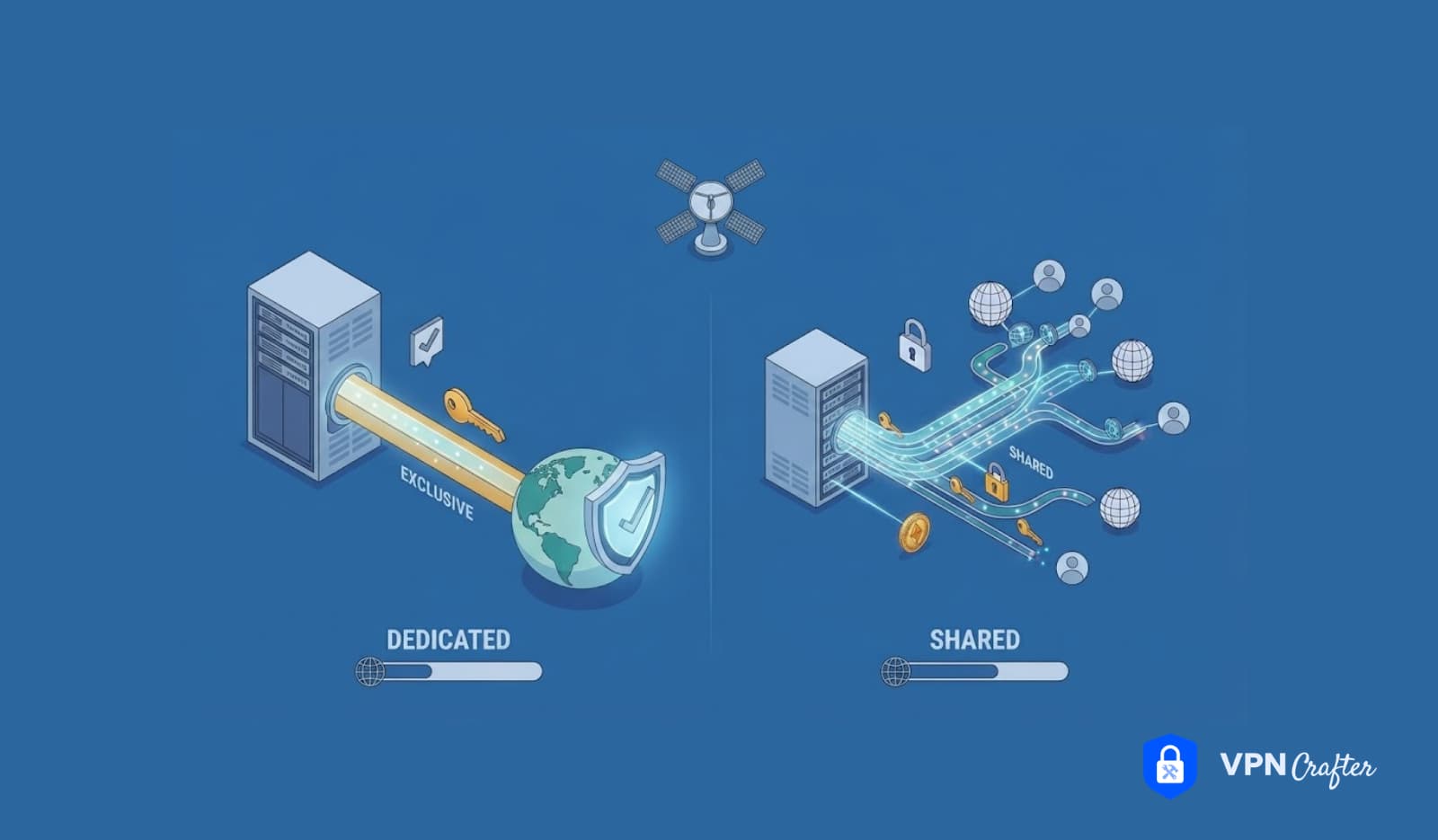
- Server infrastructure — number of countries, bandwidth capacity, and dedicated versus shared servers
- Team location and structure — in-house, freelance, or a specialized VPN app development company like VPN Crafter
Notably, these factors interact with each other. For instance, adding a reseller panel doesn’t just add development hours; it also increases backend testing time, security auditing requirements, and long-term maintenance obligations. That’s why a proper VPN app development estimate should always be scoped feature-by-feature rather than pulled from a flat industry average.
Average VPN App Development Cost by Project Type
To make this practical, here’s how VPN app development pricing typically breaks down across common project types. These ranges reflect real-world quoting patterns we see at VPN Crafter, though final numbers always depend on scope depth.
| Project Type | Typical Cost Range | Timeline |
|---|---|---|
| Basic single-platform VPN app (client only) | $15,000 – $35,000 | 6–10 weeks |
| Cross-platform VPN app (Android + iOS) | $35,000 – $70,000 | 10–16 weeks |
| Full-stack VPN app with backend & billing | $60,000 – $120,000 | 4–6 months |
| White label VPN development package | $8,000 – $40,000 | 2–8 weeks |
| Enterprise VPN app development | $150,000 – $300,000+ | 6–12 months |
| Custom VPN development (built from scratch) | $80,000 – $250,000+ | 5–9 months |
As the table shows, the gap between the cheapest and most expensive option is enormous — and that gap almost always comes down to whether you’re licensing existing technology or building custom VPN development from the ground up. If you’re evaluating your options, our breakdown of White Label VPN Development explains why so many startups now choose that route over full custom builds.
Platform-Specific Development Costs
Since VPN app development cost varies significantly by operating system, it’s worth examining each platform individually rather than assuming a single flat rate applies everywhere.
Android VPN App Development Cost
Android VPN app development typically costs between $15,000 and $45,000, depending on protocol support and UI complexity. Android’s open architecture makes VPN integration somewhat more flexible, though fragmentation across device manufacturers can add testing overhead.
iOS VPN App Development Cost
iOS VPN app development cost generally runs $18,000 to $50,000. Apple’s stricter App Store review process — particularly around Network Extension entitlements — adds compliance work that Android doesn’t require, which is why iOS builds often land slightly higher.
Windows VPN App Development Cost
Windows VPN app development cost sits around $12,000 to $35,000 for a desktop client with standard protocol support. Kernel-level driver integration for kill switch functionality tends to be the biggest cost variable here.
macOS VPN App Development Cost
macOS builds typically cost $15,000 to $38,000, largely due to Apple’s notarization requirements and system extension approval process, which mirror some of the iOS compliance overhead.
Cross-Platform VPN App Development Cost
Choosing cross-platform VPN app development — using frameworks like Flutter or React Native alongside native VPN SDKs — usually costs $40,000 to $90,000 but delivers all major platforms from a shared codebase. Many founders prefer this route since it reduces long-term VPN app development for Android and iOS maintenance into a single unified pipeline.
Ultimately, the platform decision should be driven by where your actual users are. Brazil, India, and much of Europe skew heavily mobile-first, whereas enterprise buyers in the US and UK often expect robust Windows and macOS desktop clients too.
Feature-Based Cost Breakdown
Features are where VPN app development costs either stay lean or balloon quickly. Below is a realistic look at how individual features affect the final invoice.
| Feature | Estimated Added Cost | Notes |
|---|---|---|
| WireGuard protocol integration | $3,000 – $8,000 | Faster, lighter, increasingly the industry standard |
| OpenVPN protocol integration | $4,000 – $10,000 | Older, highly compatible, more configuration overhead |
| Multiple protocol support | $8,000 – $18,000 | Requires additional QA across networks |
| Kill switch | $2,000 – $5,000 | Critical for privacy-focused users |
| Split tunneling | $3,000 – $7,000 | Popular among gaming and streaming users |
| Automatic server selection | $2,500 – $6,000 | Improves UX, requires latency-testing logic |
| Subscription & payment gateway | $6,000 – $15,000 | Stripe, PayPal, in-app purchase compliance |
| Admin panel | $8,000 – $20,000 | Server management, user analytics, billing oversight |
| Reseller panel | $10,000 – $25,000 | Enables a full VPN reseller program |
| Referral system | $3,000 – $8,000 | Drives organic user acquisition |
Interestingly, WireGuard has become the default choice for most new builds we handle at VPN Crafter, largely because it’s lighter, faster to audit, and simpler to maintain than legacy protocols. That said, many enterprise clients still request OpenVPN alongside it for compatibility with older network policies — a decision we cover in more depth in our guide to VPN Protocols.
VPN Server Infrastructure Cost
Development cost only tells half the story. VPN server infrastructure cost — the ongoing expense of running your global network — often surprises first-time founders more than the app build itself.
Rough monthly infrastructure costs look like this:
- Small deployment (5–10 server locations): $500 – $2,000/month
- Mid-size deployment (20–40 locations): $3,000 – $8,000/month
- Large-scale deployment (60+ locations, dedicated bandwidth): $10,000 – $30,000+/month
Because bandwidth, dedicated IPs, and DDoS protection scale with user volume, infrastructure spending typically grows faster than most founders anticipate once user acquisition picks up. This is also where server security becomes non-negotiable; misconfigured nodes are a common entry point for attackers, a topic we unpack thoroughly in our piece on Common VPN Server Vulnerabilities.
VPN App Development Cost by Business Stage
Not every buyer needs the same solution, so it makes sense to segment cost expectations by business stage.
VPN App Development Cost for Startups
Startups typically spend $15,000–$50,000, often opting for white label solutions to launch quickly without absorbing full custom VPN development cost upfront. Speed to market matters more than owning proprietary code at this stage.
VPN App Development Cost for Small Businesses
Small businesses generally budget $40,000–$90,000, balancing some customization — branding, unique feature sets — with cost efficiency through semi-custom builds.
VPN App Development Cost for Enterprises
Enterprise VPN app development cost frequently exceeds $150,000, driven by compliance requirements, dedicated infrastructure, custom security auditing, and SLAs that smaller vendors simply can’t offer.
If you’re still deciding between building from scratch and licensing existing technology, our comparison guide on White Label Vs Reseller models breaks down which path fits each business stage more precisely.
VPN Developer Hourly Rates by Region
Since labor cost is a major input, here’s a realistic look at VPN developer hourly rate ranges by region, which directly affects your VPN app development budget depending on where your team is based.
| Region | Hourly Rate (USD) |
|---|---|
| United States / Canada | $80 – $180 |
| United Kingdom / Western Europe | $60 – $140 |
| Eastern Europe (Poland, Ukraine, Romania) | $35 – $70 |
| India / South Asia | $20 – $45 |
| Latin America (Brazil, Mexico) | $30 – $60 |
Naturally, cheaper hourly rates don’t always translate into lower total cost, since inexperienced teams often require more revision cycles, particularly around VPN encryption and authentication logic, where mistakes are costly to fix later.
Hidden Costs Most Founders Forget
Even well-researched founders tend to underestimate a handful of recurring expenses. These include:
- App Store and Play Store developer accounts and compliance reviews
- SSL certificates and code-signing renewals
- Third-party audits for no-logs policy verification
- Customer support tooling and staffing
- Localization for non-English markets (particularly relevant for Brazil, France, Germany, and Spain)
- Ongoing VPN app development for Android and iOS updates tied to OS version releases
Because these costs accumulate gradually rather than appearing in one lump sum, they’re frequently left out of initial VPN app development cost estimates — only to resurface six months after launch.
Expert Insights From the VPN Crafter Build Team
Having scoped dozens of VPN projects, our team at VPN Crafter has noticed a consistent pattern: clients who start with a narrow MVP and phase in features later end up spending less overall than those who try to launch everything at once. One client, a reseller-focused startup targeting the Indian market, initially requested a full custom build with a proprietary protocol stack. After a scoping session, we recommended a white label foundation with WireGuard support and a phased reseller panel rollout instead — cutting their initial VPN app development cost by nearly 60% while still hitting their launch deadline.
Another recurring insight involves infrastructure planning. Founders often budget generously for the app itself but severely underestimate VPN server infrastructure cost at scale. A European client who launched with 15 server locations found their monthly infrastructure spend tripled within four months simply due to unexpected user growth in Germany and the Netherlands. Planning infrastructure cost as a percentage of projected user growth, rather than a fixed number, has become standard practice in how VPN Crafter now scopes new projects.
Statistics & Data
To ground this guide in verifiable context rather than guesswork, consider the following industry data points:
- The global VPN market was valued at approximately $51 billion in 2023, according to Grand View Research, with continued double-digit growth projected through the decade.
- WireGuard’s cryptographic protocol has been formally verified using the Tamarin prover, a factor increasingly cited by enterprise buyers when comparing VPN protocols for new deployments.
- Gartner’s enterprise VPN priorities research indicates that security auditing and scalability consistently rank among the top three purchase criteria for business VPN buyers.
- Zscaler’s ThreatLabz VPN Risk Report (2024) found that a majority of enterprise security teams consider legacy VPN infrastructure a meaningful attack surface, reinforcing why protocol modernization (like WireGuard adoption) affects long-term development decisions.
- NSA and CISA’s joint VPN hardening guidance (2021) explicitly recommends regular server security audits, which directly factors into realistic infrastructure and maintenance budgeting.
These figures matter because they illustrate that VPN app development cost isn’t just a product decision — it’s tied to a growing, increasingly security-conscious global market.
Common Mistakes That Inflate VPN App Development Cost
Many founders unknowingly overspend due to a handful of recurring missteps.
- Skipping the scoping phase. Jumping straight to development without a detailed feature spec almost always leads to costly mid-project changes.
- Choosing custom development too early. Building everything from scratch before validating demand often wastes budget that a white label approach could have preserved.
- Ignoring server infrastructure planning. Treating hosting as an afterthought leads to painful cost surprises after launch.
- Underestimating compliance work. App Store and regulatory reviews (particularly for privacy claims) frequently get overlooked in initial estimates.
- Hiring solely based on hourly rate. The cheapest quote often results in more revision cycles, ultimately costing more in total.
- Neglecting monetization architecture. Adding a subscription system or reseller panel after launch is significantly more expensive than building it in from day one.
Avoiding these pitfalls alone can shave 20–30% off a typical VPN app development budget.
Best Practices for Budgeting a VPN App
To keep costs predictable and outcomes strong, we recommend the following framework:
- Start with a clear MVP feature list, prioritizing core protocols and security features before add-ons like referral systems.
- Request itemized quotes, not flat estimates, so you can see exactly what’s driving cost.
- Plan infrastructure cost separately from development cost, since these are ongoing rather than one-time expenses.
- Choose a development partner with proven VPN-specific experience, since general app developers often underestimate protocol and encryption complexity.
- Budget 15–20% contingency for post-launch fixes and compliance adjustments.
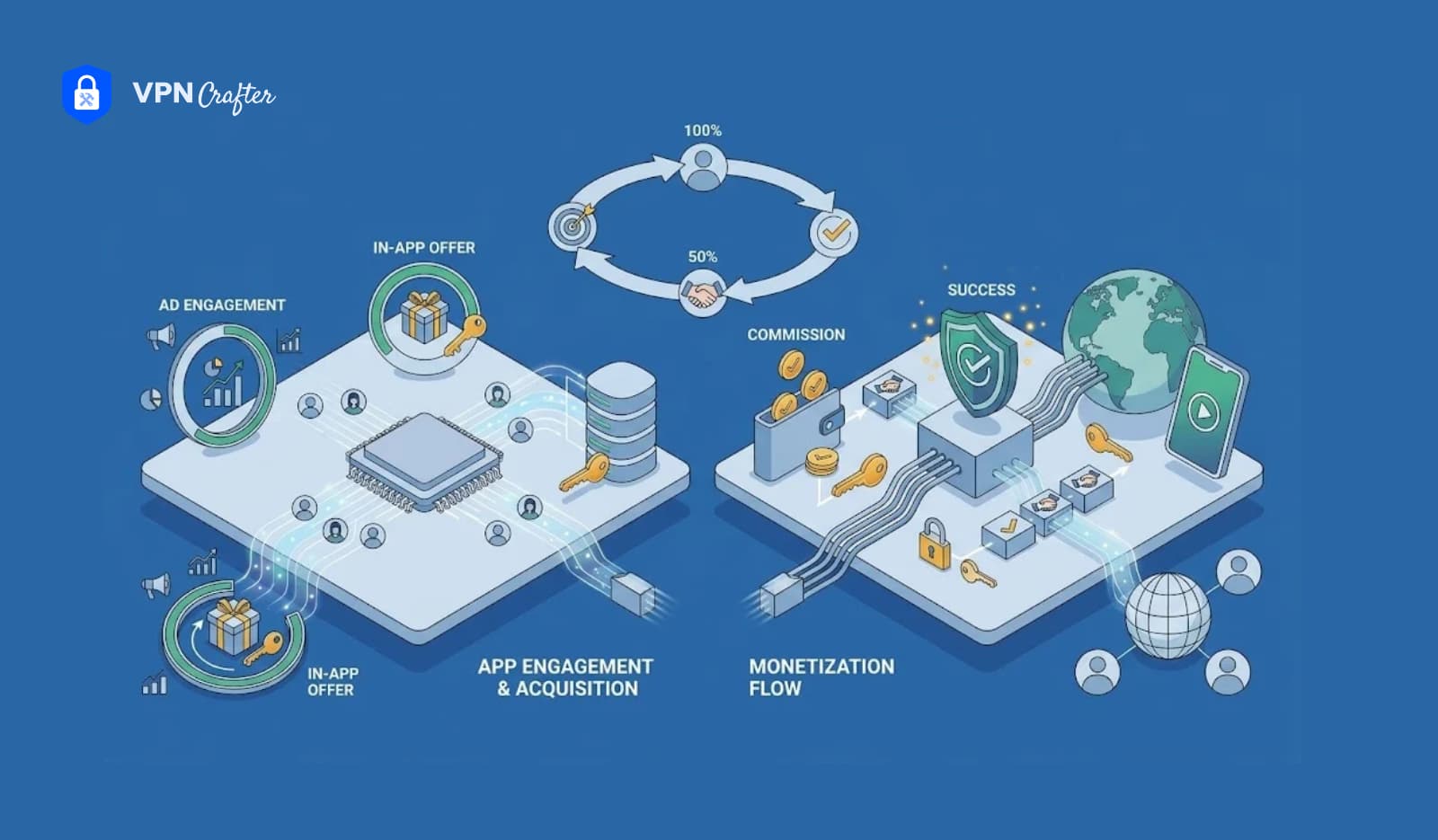
- Evaluate monetization early, whether through direct subscriptions, a reseller program, or affiliate partnerships — a decision covered in depth in our guide on VPN Monetization Models.
Following this framework tends to produce far more accurate VPN app development estimates than relying on a single agency quote alone.
Frequently Asked Questions
How much does it cost to develop a VPN app?
VPN app development cost typically ranges from $15,000 for a basic single-platform client to over $250,000 for a full custom, enterprise-grade platform, depending on protocols, features, and infrastructure scope.
How much does it cost to build a VPN app from scratch?
Building a VPN app entirely from scratch, without white label components, generally costs between $80,000 and $250,000, since it requires custom protocol implementation, backend architecture, and full security auditing.
How much does it cost to create a VPN app for Android?
Android VPN app development cost usually falls between $15,000 and $45,000, depending on protocol support, UI complexity, and monetization features.
How much does it cost to develop an iOS VPN app?
iOS VPN app development typically costs $18,000 to $50,000, partly due to Apple’s stricter Network Extension and App Store compliance requirements.
How much does it cost to build a cross-platform VPN app?
Cross-platform VPN app development generally ranges from $40,000 to $90,000, covering both Android and iOS from a shared codebase.
How much does it cost to develop a custom VPN app?
Custom VPN development cost typically starts around $80,000 and can exceed $250,000 for enterprise-level security, scalability, and infrastructure requirements.
How much does it cost to start a VPN app business?
Starting a VPN app business, including app development, initial server infrastructure, and basic monetization tools, usually requires $25,000 to $80,000 depending on whether you choose white label or custom development.
What factors affect VPN app development cost?
Key factors include platform scope, protocol stack, backend complexity, server infrastructure needs, monetization features, and development team location.
How long does it take to develop a VPN app?
Development timelines range from 6–10 weeks for basic apps to 6–12 months for enterprise-grade platforms with full custom infrastructure.
How much does it cost to maintain a VPN app?
Ongoing VPN app maintenance typically costs 15–20% of the initial development budget annually, covering updates, security patches, and infrastructure scaling.
What is the average VPN app development cost for startups?
Startups typically spend $15,000 to $50,000, often through white label VPN development, to launch quickly while managing budget constraints.
Is white label VPN development cheaper than custom development?
Yes, white label VPN development typically costs $8,000 to $40,000, significantly less than custom builds, since core infrastructure and protocols already exist.
What is the hourly rate for VPN developers?
VPN developer hourly rates range from $20 in South Asia to $180 in the United States, depending on region and experience level.
Do VPN apps need ongoing server costs after development?
Yes, VPN server infrastructure cost continues indefinitely after launch, ranging from a few hundred dollars monthly for small deployments to tens of thousands for large-scale global networks.
Which VPN protocols affect development cost the most?
WireGuard tends to be more cost-efficient to implement than OpenVPN, though supporting multiple protocols simultaneously increases both development and testing costs.
Conclusion
At the end of the day, VPN app development cost isn’t a single figure you can pull from a chart — it’s a reflection of the platforms you target, the protocols you support, the features you prioritize, and the infrastructure you’re willing to scale. Founders who treat this as a one-time purchase rather than an ongoing investment tend to be the ones surprised by hidden costs later.
Meanwhile, those who plan deliberately, whether through white label solutions or fully custom builds, consistently launch faster and spend smarter. If you’re ready to move from estimates to an actual roadmap, VPN Crafter’s team can walk you through a transparent, itemized quote built specifically around your target platforms, features, and audience — no vague pricing, no surprise invoices. Reach out to VPN Crafter today to get a real VPN app development estimate built around your business, not a generic template.
Key Takeaways
- VPN app development cost ranges from $15,000 (basic single-platform) to $250,000+ (enterprise custom builds).
- Platform choice, protocol stack, and backend features are the biggest cost drivers.
- White label VPN development offers a significantly cheaper, faster path to market than custom builds.
- VPN server infrastructure cost is ongoing and often underestimated by first-time founders.
- Regional developer hourly rates vary widely, from $20 to $180 per hour.
- Proper scoping and phased feature rollout can reduce total project cost by 20–30%.
- VPN Crafter provides itemized, transparent quotes tailored to platform, protocol, and monetization needs.