

In April 2023, Swedish police walked into Mullvad’s offices carrying a search warrant for customer data. They walked out with nothing — not because lawyers blocked the door, but because the servers had nothing to give. Every byte of operational state lived in volatile memory, engineered to vanish at power-off.
That anticlimax is the entire sales pitch for RAM-only VPN servers, and it deserves a proper engineering explanation rather than a marketing paragraph. Diskless infrastructure has become the architecture standard among audited providers — ExpressVPN’s TrustedServer pioneered it at scale in 2019, NordVPN and Surfshark converted their fleets in 2020, and Windscribe rebuilt around it after a 2021 seizure exposed exactly what happens when disks remember.
Yet most explanations stop at the slogan: “everything wipes on reboot.” Builders deserve the layer beneath — how a server boots with no disk to boot from, why swap files silently betray the whole design, what a hypervisor snapshot does to your guarantees, and where the architecture genuinely cannot protect you.
Our engineering team at VPN Crafter runs diskless fleets daily and hands them to white label partners as inherited infrastructure. This deep dive documents the architecture the way we would explain it to a new engineer: the boot-to-wipe lifecycle step by step, the component stack, an honest threat model with both columns filled in, the operational trade-offs, and the compliance dividends that make the whole investment pay twice.
What Are RAM-Only VPN Servers?
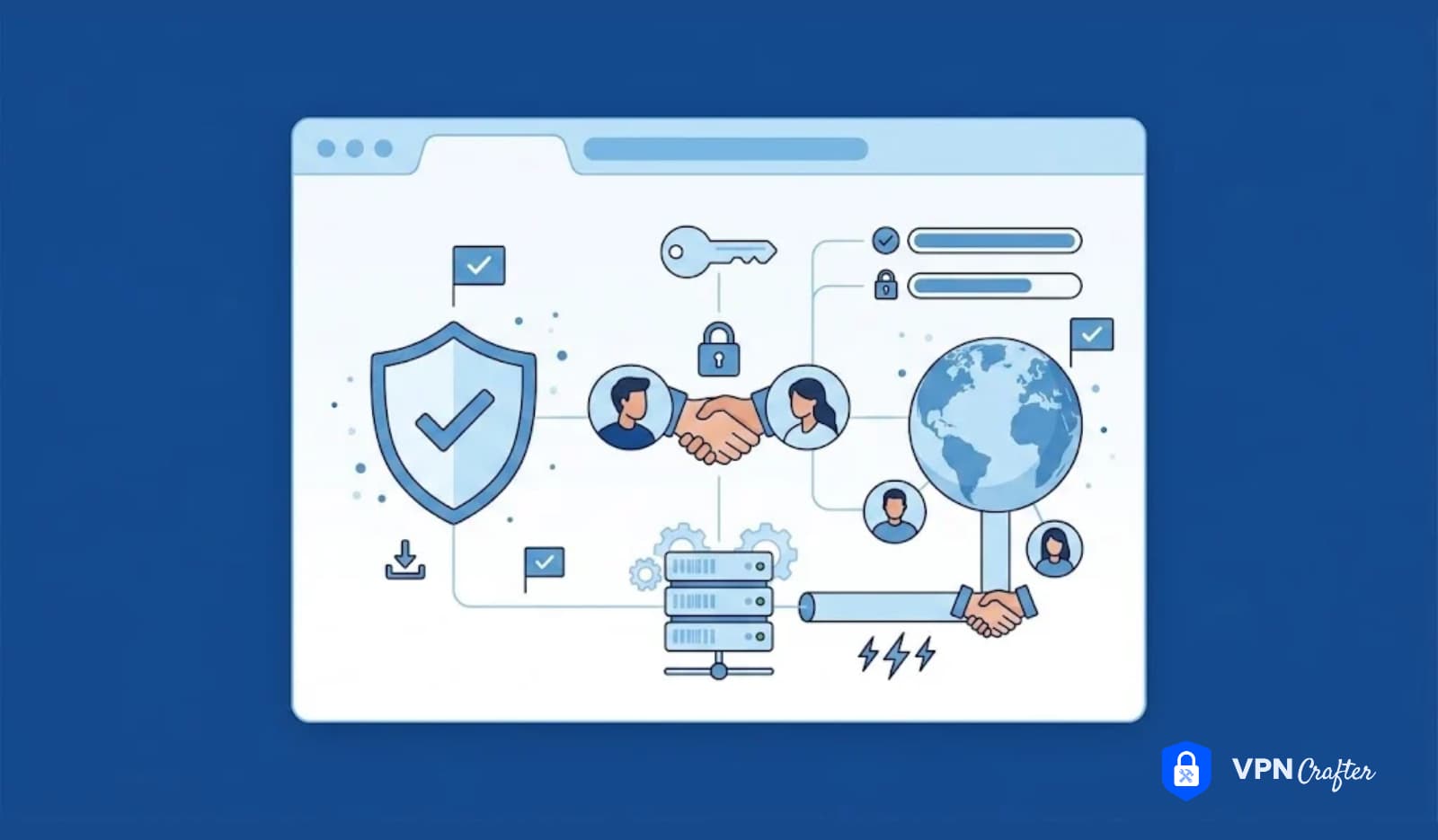
RAM-only VPN servers are diskless machines that load their entire operating system, VPN software, and runtime state into volatile memory from a signed, read-only image at boot — with no writable persistent storage attached — so that every reboot or power loss erases all data completely and irrecoverably.
Unpack the definition and four engineering commitments emerge:
- No writable disk, ever. The server either has no drives at all or treats attached storage as cryptographically irrelevant — nothing operational touches it.
- Boot from an immutable source. The OS image arrives over the network (PXE-style) or from read-only media, verified by signature before a single process starts.
- Volatile everything. Filesystems live in tmpfs; session state, keys, and DNS caches exist only as electrical charge in DRAM.
- Reboot equals factory reset. Power-cycling any node returns it to the exact signed image — wiping not just user data but any tampering, malware, or configuration drift accumulated since the last boot.
Synonyms you will meet in the wild — diskless servers, volatile-memory infrastructure, ephemeral nodes, TrustedServer-style architecture — all describe this same contract. The contract’s purpose is singular: make the server physically incapable of remembering its users, so that seizures, forensics, and forgotten debug files all reach into memory that no longer exists.
A RAM-only VPN server runs its entire operating system and all session data in volatile memory, booting from a signed read-only image with no writable disk. Every reboot wipes everything — user data, keys, malware, and configuration drift — which is why seized diskless servers (as in the 2023 Mullvad raid) yield no customer information.
Why Disks Became a Liability
Hard drives fail VPN providers in three recurring ways, and the industry’s migration to memory was written by incidents, not whitepapers.
Seizure forensics. A disk is a time capsule for whoever physically holds it. When Ukrainian authorities seized Windscribe servers in 2021, no user activity logs existed — yet the disks still carried an outdated, unencrypted server key, theoretically enabling traffic impersonation. Nobody had logged anything; the disk had simply remembered something everyone forgot. Windscribe’s response — a full migration to diskless boot — became the industry’s most instructive case study.
Configuration drift. Writable storage invites hand-edits, hotfixes, and “temporary” debug files that outlive their authors’ memory. Over years, a fleet of writable servers diverges into unique snowflakes, and any one of them can contradict the no-logs policy the company sincerely believes it follows. Immutable images end drift by construction: every boot restores the audited baseline.
Persistent compromise. Malware that achieves disk persistence survives reboots and waits. On a diskless node, an attacker’s foothold lasts exactly until the next power cycle — and disciplined fleets cycle on schedule precisely to enforce that eviction.
Contrast the failure stories with the success ones. ExpressVPN’s Turkey seizure in 2017 yielded investigators nothing usable; Mullvad’s 2023 raid ended with police leaving empty-handed. The pattern that separates the outcomes is not superior lawyers. It is architecture that made the question moot.
The Boot-to-Wipe Lifecycle, Step by Step
Follow one node through its entire existence — this five-stage loop is the architecture in motion.
Stage 1: Build the Golden Image
Everything begins in a CI pipeline, far from production. Engineers define the OS, hardened kernel, VPN daemons (WireGuard, OpenVPN), DNS resolver, and health-reporting agent as code; the pipeline assembles a minimal, read-only image and runs it through automated security checks. No production server is ever configured by hand — the image is the configuration.
Stage 2: Sign and Publish
The pipeline cryptographically signs the finished image and publishes it to the boot infrastructure. Signing is non-negotiable: a diskless fleet concentrates trust in its image supply chain, so the private signing keys and the build pipeline deserve the same protection as the servers themselves — arguably more.
Stage 3: Network Boot and Verify
A node powers on with nothing to say for itself. Its firmware requests an image over the network (PXE/iPXE-style flows), verifies the signature before execution, unpacks the OS into an in-memory filesystem (tmpfs), and mounts everything read-only except explicitly volatile paths. Secure Boot and measured-boot attestation, where deployed, extend verification down to firmware.
Stage 4: Inject Ephemeral State and Serve
Runtime specifics — this node’s certificates, WireGuard keys, region configuration — arrive at boot from the control plane and live only in memory. Session keys rotate continuously (complementing perfect forward secrecy at the protocol layer), DNS resolution happens locally without query logging, and the health agent reports aggregate, user-free metrics upstream. The node now serves traffic while holding nothing worth stealing.
Stage 5: Rotate, Reboot, Repeat
On schedule — or instantly, on any anomaly — the node reboots. Memory discharges, and with it every session table, cached credential, drifted setting, and hypothetical implant. The node rejoins the fleet as a pristine copy of the current signed image, and the loop closes. Fleet-wide, rotation is staggered and connection-drained so users never notice the amnesia that protects them.
The Component Stack: What Makes Diskless Actually Diskless
| Layer | Component | Role | The Silent Failure If Ignored |
|---|---|---|---|
| Boot | PXE/iPXE network boot (or read-only media) | Delivers the OS with no local install | Unprotected boot infra becomes the master key |
| Integrity | Image signing, Secure Boot, measured boot | Guarantees only the audited image runs | Unsigned images invite supply-chain swaps |
| Filesystem | tmpfs/ramfs root, read-only mounts, overlay for volatile paths | Keeps all writes in DRAM | One writable mount quietly persists state |
| Memory policy | Swap disabled, core dumps off or memory-bound | Prevents RAM spilling to any disk | Default swap files copy “volatile” secrets to storage |
| Hardware | Bare metal preferred; scrutinized virtualization otherwise | Ensures memory is actually volatile | Hypervisor snapshots/page files persist guest RAM |
| Keys | Boot-time injection, in-memory only, continuous rotation | Nothing long-lived to seize | Baked-in keys recreate the Windscribe failure |
| Observability | Aggregate, user-free health metrics shipped off-node | Operations without user data | Local debug logs rebuild what the design forbids |
Two rows deserve emphasis because they separate genuine implementations from marketing ones. Swap is the classic betrayal: a default Linux install happily pages “volatile” memory onto disk, so a RAM-only claim with swap enabled is false at the kernel level. Virtualization is the subtler trap — a VPS labeled “RAM-only” still lives atop a hypervisor that can snapshot, migrate, or page guest memory to the host’s storage, which is why serious deployments run bare metal or, at minimum, document exactly how the virtual layer is constrained.
The Honest Threat Model: What RAM-Only Stops — and What It Doesn’t
Marketing pages print the left column. Engineering decisions require both.
| ✅ Defeated by RAM-Only | ❌ Outside Its Protection |
|---|---|
| Physical seizure and disk forensics — nothing persists to image | Live attacks on a running server — memory is readable while powered |
| Forgotten artifacts: debug logs, stale keys, temp files | Compelled future logging — architecture can be ordered to change going forward |
| Malware persistence across reboots | In-memory implants during their dwell window (until rotation evicts them) |
| Configuration drift and snowflake servers | A poisoned golden image — the supply chain is the new crown jewel |
| Retroactive data demands (“hand over last month”) | Upstream observation: data centers and ISPs still see encrypted flows |
| Evidence accumulation between rotations | Cold-boot edge cases — mitigated by modern DRAM decay and encryption, not eliminated |
| Everything off-server: billing, tickets, analytics remain regulated data |
The honest summary writes itself: RAM-only architecture eliminates the past as an attack surface. The present (a live, powered node) and the supply chain (the image pipeline) remain yours to defend with rotation schedules, attestation, and pipeline security. Providers that state this plainly earn more trust than those promising magic — and auditors, notably, probe exactly these boundaries.
Operating a Diskless Fleet: The Unglamorous Engineering
The architecture is elegant; running it is a discipline. Four operational problems dominate.
Observability without user data. No local logs means debugging shifts entirely to aggregate telemetry: per-node connection counts, error rates, throughput, memory pressure — shipped off-node, containing no identities. Engineers accustomed to grepping server logs must relearn diagnosis from dashboards, and the health agent’s data schema needs the same privacy review as the tunnel itself.
Rotation choreography. Reboots are the security mechanism, so they must happen on schedule — yet every reboot drops active sessions. Mature fleets drain nodes first (stop accepting new connections, let existing ones age out), stagger rotations across regions, and keep spare capacity so the wipe cycle never becomes user-visible downtime.
Capacity mathematics. Everything living in memory means RAM budgets for the OS, connection tables, and headroom — an 8 GB node hosting image plus thousands of tunnels leaves little margin for traffic spikes. Diskless fleets therefore over-provision memory deliberately, which feeds directly into the cost section below.
Incident response without a body. When a node misbehaves, the traditional move — pull the disk, image it, analyze — no longer exists. Response becomes: capture aggregate signals, evict via reboot, and reproduce in a lab from the same signed image. Faster containment, harder root-cause work; teams should decide their forensics posture before the first incident, not during it.
What RAM-Only Infrastructure Costs
Direct answer: expect a 20–40 percent premium over conventional disk-based VPN nodes — driven by larger RAM allocations, bare-metal preference, boot infrastructure, and image-pipeline engineering — typically amounting to $50–$200 more per node per month at market rates, plus one-time pipeline build effort.
Where the premium actually lands:
- Memory over-provisioning: the OS, connection state, and headroom all rent DRAM, the priciest resource on a spec sheet.
- Bare-metal bias: genuine volatility favors dedicated hardware over cheap VPS instances, raising per-node baseline.
- Boot and signing infrastructure: redundant image servers, HSM-grade key handling, and attestation tooling — mostly fixed costs that amortize across fleet size.
- Pipeline engineering: the golden-image CI/CD, staged rollouts, and rotation automation — a build-time investment measured in engineer-months.
Founders pricing a launch should slot these numbers into the larger question of how much does VPN development cost: diskless architecture adds a modest infrastructure premium while removing entire categories of later expense — audit remediation, breach exposure, seizure fallout. Teams comparing VPN development services should ask each vendor whether RAM-only is native to their stack or a retrofit quote; the difference shows up in both the invoice and the audit report.
The Compliance and Audit Dividends
Here is where the architecture pays for itself twice, and where this deep dive connects to the rest of your compliance stack.
Audits love verifiable impermanence. Independent no-logs audits under ISAE 3000 must otherwise chase a negative — proving data isn’t kept anywhere. Diskless fleets convert that hunt into a structural inspection: no writable storage exists to check. Every major recent engagement, including NordVPN’s six Deloitte-verified rounds, leans on exactly this property, and providers preparing their first engagement will find RAM-only conversion sits atop the remediation priorities in our guide on how to prepare your VPN for its first no-logs audit — because it retires more potential findings per engineering hour than any other single control.
Regulators read the same evidence. Data-protection-by-design obligations — GDPR Article 25 and Brazil’s necessity principle — ask for engineering proof of minimization, and a signed-image, diskless fleet is that proof in physical form. The architecture dossier serving your auditor doubles as the design-by-default file in our primer on GDPR & LGPD for VPN companies; one shelf of documents, three audiences.
Trust marketing gets teeth. “We can’t hand over what we never store” is a slogan on a disk-based fleet and a demonstrable property on a diskless one — the difference between Mullvad’s 2023 headline and a subpoena scandal.
Build, Buy, or Inherit: RAM-Only Across Business Models
The architecture is identical everywhere; who builds and maintains it varies by model.
Custom builders own the whole loop. Teams pursuing custom VPN development or full-stack VPN app development build the image pipeline, boot infrastructure, and rotation automation themselves — a rewarding project and a multi-quarter one. The complete architectural context (clients, tunnel, fleet, control plane) lives in our pillar guide to VPN development; read the diskless layer as one subsystem of that larger machine, designed in from the first diagram rather than retrofitted after launch.
Enterprise deployments borrow the pattern selectively. Enterprise VPN development for internal remote access gains the same anti-drift and anti-persistence properties, and diskless gateways slot neatly into zero-trust-era security reviews — though corporate compliance may require carefully scoped, off-node audit logging that consumer no-logs products refuse. The architecture flexes; the data policy is the decision.
White label brands inherit the finished system. For most founders, the rational path skips the pipeline-building quarters entirely: a white label VPN development platform running native RAM-only infrastructure hands you the golden images, signed boot chain, rotation choreography, and evidence dossier as a solved problem. Due diligence still applies — demand proof the fleet is genuinely diskless (swap policy, bare-metal footprint, image signing) rather than marketing-diskless, and pair the inherited architecture with your own brand-layer obligations from a proper white label VPN compliance checklist. At VPN Crafter, that documentation is the onboarding packet, because inherited trust should arrive in writing.
Expert Insights from the VPN Crafter Team
Scar tissue from running memory-resident fleets, shared specifically:
Insight 1: Swap betrayed us on day one. Our first diskless prototype passed every design review — and its base image shipped with a default swap partition quietly enabled. The kernel was paging “volatile” session memory to disk while we congratulated ourselves. The fix became doctrine: the image pipeline now fails the build if swap, core dumps to disk, or writable persistent mounts exist anywhere. Trust the pipeline check, never the checklist.
Insight 2: The crash handler was the last thing writing to disk. Months into production, a review found our crash-reporting agent configured to spool dumps locally before upload — memory contents, briefly, on storage. We rebuilt it to stream crash data (scrubbed, memory-bound) directly off-node. Audit every agent on the image, not just the applications; vendors’ defaults assume disks exist.
Insight 3: A “RAM-only” VPS taught us the bare-metal rule. An early capacity experiment ran diskless images on rented virtual machines — until we confirmed the host hypervisor could page and snapshot guest memory at will. The guest’s discipline meant nothing to the host’s storage. Our fleet policy since: bare metal for traffic nodes, and any virtualized exception documented with the exact hypervisor constraints, because a guarantee you cannot enforce is a hope.
Insight 4: Rotation cadence is a security dial, and users feel it. We once tightened reboot frequency fleet-wide for maximal implant eviction — and watched long-session users (large downloads, persistent tunnels) hit disconnects. The mature answer was per-region drain windows: nodes stop accepting connections hours before their wipe, letting sessions age out naturally. Security cadence and user experience stopped fighting once draining did the diplomacy.
Insight 5: The image pipeline is now our most-guarded asset. A diskless fleet relocates all persistent trust into one place: the build-and-sign chain. We treat it accordingly — isolated build environment, hardware-backed signing keys, two-person rollout approval, staged canary boots. Attackers who understand the architecture will not chase your servers; they will court your pipeline. Guard it like the crown jewels it became.
Statistics and Data: Diskless as the 2026 Standard
Citable facts, sources named:
- The 2023 Mullvad police raid ended with no customer data seized — officers left empty-handed after confirming the infrastructure held nothing to take — the architecture’s most cited real-world validation. (Mullvad disclosure; press coverage)
- ExpressVPN’s TrustedServer, launched in 2019, was the first RAM-only deployment at major-provider scale, and has since been covered by multiple independent audits within the company’s 19+ published reports. (ExpressVPN; TechRadar)
- NordVPN and Surfshark completed fleet-wide RAM-only conversions in 2020, and their subsequent Deloitte ISAE 3000 engagements — six for NordVPN through December 2025, two for Surfshark through June 2025 — verify the diskless configurations directly. (Provider disclosures; Tom’s Guide; TechRadar)
- Windscribe’s 2021 Ukraine seizure — an unencrypted legacy key found on disk despite a genuine no-logs policy — triggered its public migration to diskless boot, the industry’s clearest before/after case study. (Windscribe disclosure)
- Privacy researchers now list RAM-only infrastructure among baseline trust criteria, alongside audit recency, when ranking providers. (Independent VPN review methodologies; Redact.dev analysis)
- Commercial context: with the VPN market at $86 billion in 2026 and 1.75 billion users worldwide, architecture-backed trust claims are the differentiator in an increasingly verified marketplace. (The Business Research Company; VPNpro)
The through-line: every headline seizure since 2017 sorted providers into two groups — those whose disks testified against them, and those whose memory had nothing to say. The market noticed.
Common RAM-Only Implementation Mistakes
- Leaving swap enabled. The kernel pages your “volatile” secrets to disk while the marketing page says otherwise — the single most common false-diskless failure.
- Trusting virtualization by default. Hypervisor snapshots and host paging persist guest memory; bare metal or documented constraints, nothing in between.
- Forgetting the agents. Crash handlers, monitoring daemons, and vendor tooling ship with disk-writing defaults that quietly break the design.
- Baking long-lived keys into the image. Boot-time injection exists precisely so a leaked image or seized node holds nothing durable — Windscribe’s lesson, generalized.
- Underprotecting the boot pipeline. Unsigned images and casual signing-key handling relocate the entire fleet’s trust into an unguarded room.
- Rotating rarely (or never). Reboots are the eviction mechanism for drift and implants; a diskless node that runs untouched for a year has surrendered half the benefit.
- Rotating carelessly. Wipes without connection draining convert a security feature into user-visible outages.
- Rebuilding logs locally “just for debugging.” One writable mount plus one tired engineer recreates everything the architecture forbids.
- Claiming RAM-only without evidence. Auditors, reviewers, and Reddit will ask about swap, hardware, and signing; providers without documented answers wear the burden publicly.
- Treating diskless as the whole compliance story. Billing, tickets, and analytics remain regulated personal data — memory-resident tunnels never absolve the business layer.
Best Practices for Diskless VPN Fleets
- Fail the build, not the audit: pipeline checks that reject swap, writable mounts, disk-spooling agents, and unsigned artifacts before anything ships.
- Prefer bare metal for traffic nodes; document hypervisor constraints explicitly wherever virtualization is unavoidable.
- Inject all secrets at boot, rotate session keys continuously, and let perfect forward secrecy complement the wipe cycle at the protocol layer.
- Schedule rotation as policy — staggered, drained, regionally aware — so implant eviction and user experience stop competing.
- Ship only aggregate, identity-free telemetry off-node, and give the health agent’s schema the same privacy review as the tunnel.
- Guard the image pipeline like production-plus: isolated builds, hardware-backed signing, multi-person rollouts, canary boots.
- Document the honest threat model — both columns — for auditors, partners, and your own marketing team.
- Verify inherited claims: white label founders should demand swap policy, hardware footprint, and signing evidence in writing before the brand launch borrows the trust.
Frequently Asked Questions
What is a RAM-only VPN server?
A RAM-only VPN server runs its entire operating system, VPN software, and session state in volatile memory, booting from a signed read-only image with no writable disk. Every reboot or power loss erases all data completely, so seized hardware yields no user information.
How do RAM-only servers boot without a hard drive?
They load a signed OS image over the network (PXE/iPXE-style boot) or from read-only media, verify its signature, and unpack it into an in-memory filesystem (tmpfs). Node-specific keys and configuration arrive from the control plane at boot and exist only in memory.
Are RAM-only VPN servers really more secure?
For the threats they target — seizure forensics, forgotten files, malware persistence, and configuration drift — yes, demonstrably: the 2023 Mullvad raid and 2017 ExpressVPN seizure both ended without user data. They do not protect a live, running server from active compromise or replace supply-chain security for the boot image.
What happens to a RAM-only server when it loses power?
Everything vanishes: session tables, cryptographic keys, caches, any tampering, and any data an attacker or authority hoped to recover. The node returns to service only by re-verifying and reloading the current signed image from scratch.
Which VPN providers use RAM-only servers?
ExpressVPN (TrustedServer, since 2019), NordVPN and Surfshark (fleet-wide since 2020), Mullvad (diskless boot), Windscribe (post-2021 migration), and Private Internet Access, among others — with the configurations verified inside the major providers’ independent audit programs.
Why is disabling swap critical for RAM-only servers?
Swap lets the kernel page memory contents onto disk, silently persisting the exact data the architecture promises never to store. A “RAM-only” server with swap enabled is false at the operating-system level, which is why build pipelines should reject it automatically.
Can a virtual machine be truly RAM-only?
Only with caveats. Hypervisors can snapshot, migrate, or page guest memory to host storage regardless of the guest’s discipline, so genuine guarantees favor bare metal. Virtualized deployments claiming RAM-only status should document exactly how the host layer is constrained.
Do RAM-only servers make a VPN no-logs?
They enforce no-logs for the connection layer structurally — nothing can persist between reboots — but no-logs remains a whole-company property covering billing, support, and analytics too. Independent audits verify both the diskless configuration and the surrounding operations.
How often should diskless VPN servers reboot?
On a deliberate schedule — commonly measured in days to weeks per node, staggered across the fleet — because rotation is the mechanism that evicts drift and any in-memory compromise. Connection draining before each wipe keeps the cadence invisible to users.
What are the downsides of RAM-only VPN infrastructure?
A 20–40 percent cost premium (memory over-provisioning, bare-metal bias, boot infrastructure), harder traditional forensics, session-drop management around rotations, and concentrated trust in the image-signing pipeline — all manageable, none free.
Does RAM-only architecture help with GDPR and LGPD compliance?
Substantially. Data-protection-by-design obligations ask for engineering proof of minimization, and a diskless, signed-image fleet is that proof in physical form — the same dossier serving privacy regulators, no-logs auditors, and skeptical customers.
Can seized RAM-only servers reveal anything at all?
A powered-off diskless node reveals essentially nothing; modern DRAM decays within moments of power loss, and cold-boot recovery is an edge case further blunted by memory encryption. A node seized while running is a live-attack scenario — which is why rotation schedules and physical security still matter.
Should a new VPN business build RAM-only infrastructure or inherit it?
Building means multi-quarter pipeline, boot, and rotation engineering — worthwhile when infrastructure is your differentiator. Most new brands inherit it faster through a white label platform with native diskless fleets, then verify the claims (swap policy, hardware, signing) in writing during due diligence.
Conclusion: Engineering a Server That Cannot Betray You
Strip away the branding and RAM-only architecture makes one austere promise: the server cannot testify, because it cannot remember. Every design choice in this deep dive — signed images, network boot, tmpfs roots, murdered swap, bare metal, scheduled amnesia — serves that single property, and every headline raid since 2017 has graded the industry against it. Providers whose memory held nothing walked away with trust compounded; providers whose disks remembered spent years rebuilding.
The engineering honesty matters as much as the engineering. Diskless fleets eliminate the past as an attack surface while leaving the present and the supply chain to defend — and providers who publish that threat model, both columns, earn the credibility the architecture was built to create. Memory forgets; markets don’t.
Key Takeaways
- RAM-only means structurally forgetful: signed read-only images, in-memory filesystems, boot-injected keys, and reboots that wipe everything — data, drift, and implants alike.
- The lifecycle is the architecture: build → sign → netboot-verify → serve ephemerally → rotate, with the image pipeline as the new crown jewel.
- Two silent killers break false implementations: enabled swap and unconstrained virtualization — both detectable, both disqualifying.
- The threat model has two columns: seizures, forensics, and persistence lose; live attacks, supply chains, and the business layer remain yours to defend.
- The premium runs 20–40 percent and pays twice: audit evidence and regulatory design-by-default proof come from the same dossier.
- Build it only if infrastructure is your moat; otherwise inherit it verified, in writing, from a platform that runs it natively.
Inherit the Architecture, Skip the Quarters — With VPN Crafter
Everything this deep dive describes — golden-image pipelines, signed network boot, swap-free tmpfs fleets on bare metal, drained rotation choreography, and the evidence dossier that satisfies auditors and regulators alike — is the infrastructure VPN Crafter already operates. White label partners inherit it on day one, documented: swap policy, hardware footprint, signing chain, and threat model, in writing, ready for your first audit and your hardest customer.
Book a free consultation with the VPN Crafter team — whether you are architecting a custom diskless build or launching a brand on infrastructure engineered to forget. The strongest privacy claim in this industry is the one your servers physically cannot break. Make it yours.