
Cybersecurity threats are evolving faster than most IT teams can respond to. Remote work and hybrid environments have expanded the attack surface, making sensitive enterprise data more vulnerable. Unauthorized access, data breaches, and malware targeting corporate networks are rising concerns.
Enterprises must also comply with regulations such as GDPR, HIPAA, and CCPA. These frameworks demand rigorous controls over data in transit and at rest. Without robust encryption and secure network access, companies risk both fines and reputational damage.
Enterprise VPN solutions provide a reliable way to protect data flowing across internal networks and public internet channels. They encrypt traffic, secure remote connections, and ensure that sensitive information remains shielded from unauthorized interception.
What Is an Enterprise VPN Solution?
An enterprise VPN solution differs significantly from consumer VPN services. While consumer VPNs focus on privacy for individuals, enterprise solutions prioritize secure network access, compliance, and centralized management.
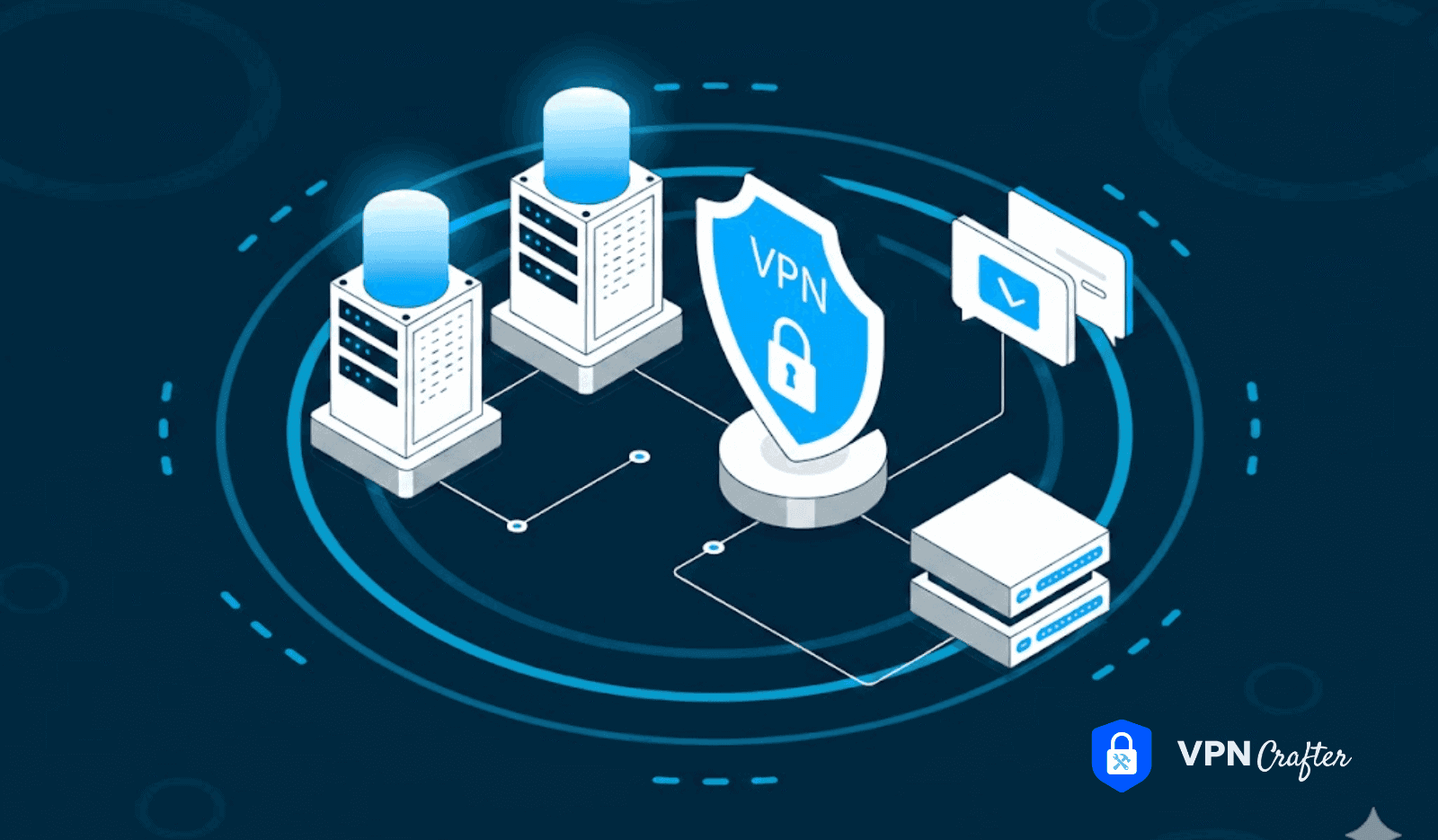
These VPNs connect multiple offices, remote teams, and cloud services into a secure network. They typically consist of:
- VPN Servers: Gateways that authenticate users and route encrypted traffic.
- VPN Clients: Software on devices allowing secure connections.
- Management Dashboards: Centralized control panels for monitoring, reporting, and configuration.
Enterprises rely on these solutions not only to protect sensitive data but also to maintain operational continuity across distributed teams.
Key Features of Enterprise VPNs
High-quality enterprise VPNs incorporate advanced security and management features:
- AES-256 Encryption and Tunneling Protocols: Secure data in transit with military-grade encryption. AES-256 ensures that traffic cannot be decrypted by attackers. Protocols like OpenVPN, IKEv2/IPSec, and WireGuard optimize performance.
- Multi-Factor Authentication and Access Control: Restrict access to sensitive resources using MFA, ensuring only verified users can connect.
- Centralized Management: IT teams can deploy, monitor, and configure VPN connections for thousands of users from a single dashboard.
- High Availability and SLA-backed Uptime: Redundant servers and failover mechanisms prevent disruptions, keeping operations continuous.
Many enterprises also leverage White Label VPN Development Solutions to integrate branded VPN services tailored for their specific security requirements.
Types of Enterprise VPN Solutions
Enterprise VPNs come in different architectures, each addressing unique needs:
- Site-to-Site VPNs: Connect branch offices to central networks, enabling seamless data sharing.
- Client-to-Site VPNs: Provide remote employees with secure access to internal resources.
- Cloud-Based VPN Solutions: Offer scalable performance, integrating easily with SaaS platforms and global cloud networks.
- Hybrid VPNs: Combine on-premise servers with cloud resources for flexibility and performance.
Choosing the right model often involves considering network size, traffic volume, and compliance needs. Enterprises often explore White Label VPN Development for Startups to rapidly deploy scalable solutions without building infrastructure from scratch.
Enterprise VPN vs Consumer VPN
Consumer VPNs are designed for privacy and content access. Enterprise VPNs focus on security, management, and compliance.
- Security: Enterprise VPNs use centralized monitoring, intrusion detection, and enterprise-grade encryption.
- Bandwidth and Performance: Optimized for high-volume, multi-location traffic, unlike consumer VPNs that may throttle speeds.
- Management and Auditing: Enable IT teams to monitor usage, enforce policies, and generate compliance reports.
Relying on consumer VPNs for critical enterprise operations is risky. They lack the oversight, performance guarantees, and regulatory alignment required by professional organizations.
Benefits of Enterprise VPNs
Enterprise VPNs offer measurable advantages:
- Protect Sensitive Data: Prevent cyberattacks, man-in-the-middle interception, and accidental leaks.
- Secure Remote Access: Employees connect from any location without compromising internal network integrity.
- Mitigate Insider Threats: Granular access controls limit exposure even if credentials are compromised.
- Support BYOD Policies: Employees use personal devices securely without exposing corporate systems.
For businesses exploring White Label VPN for Business, these features can be packaged under a branded VPN offering, expanding both internal security and market reach.
Selecting the Right Enterprise VPN
Choosing the right solution requires strategic evaluation:
- Assess Business Needs: Consider network size, remote team count, compliance requirements, and traffic patterns.
- Performance Benchmarking: Evaluate latency, speed, server availability, and uptime.
- Vendor Evaluation: Compare White Label VPN Development Service offerings, White Label VPN vs Custom VPN options, and support capabilities.
New businesses can also explore How to Start Your Own VPN Brand using white-label solutions, reducing time-to-market while leveraging enterprise-grade infrastructure.
Common Challenges and How to Overcome Them
Large-scale VPN deployment introduces operational challenges:
- Managing Deployments: Use centralized dashboards for automated onboarding and policy enforcement.
- Legacy System Compatibility: Ensure the VPN supports older operating systems or network configurations.
- Monitoring and Compliance Reporting: Implement logging and alerting systems to track anomalies and maintain audit trails.
Understanding Why VPN Startups Fail often boils down to ignoring scalability, security, or management complexity. Leveraging White Label VPN Development for Startups mitigates these risks.
Future Trends in Enterprise VPN Solutions
Enterprise networking is evolving alongside cloud computing and zero-trust models:
- Zero Trust Network Access (ZTNA): VPNs integrate with identity-based access to minimize lateral movement risks.
- AI-Driven Traffic Monitoring: Detect anomalies, prevent intrusions, and optimize routing.
- Cloud VPN Adoption: Flexible deployment, global accessibility, and reduced hardware dependency.
Revenue Models for Your White Label VPN Business can also diversify with enterprise clients, combining subscription, licensing, and managed services.
Conclusion: Is an Enterprise VPN Worth the Investment?
Enterprise VPN solutions safeguard data, ensure compliance, and maintain productivity across remote and hybrid teams. Selecting the right VPN—whether through a White Label VPN Solution or a custom-built network—reduces operational risk while future-proofing infrastructure.
For IT leaders and decision-makers, a carefully deployed enterprise VPN is not an optional luxury but a necessity. Brands like Cure VPN demonstrate how scalable, secure VPN solutions can be implemented with minimal friction, empowering businesses to protect their networks while exploring new revenue opportunities through white-label offerings.