

Privacy is no longer a feature. Privacy is the product.
Across SaaS, gaming, media, and enterprise ecosystems, demand for secure connectivity continues to surge. Users care about who sees their data, where traffic flows, and how much control they really have. That shift explains why the White Label VPN Development Service market is growing faster than traditional VPN subscriptions.
Building a VPN from scratch used to look attractive. Today, it looks risky, expensive, and slow. Infrastructure complexity, compliance pressure, and user expectations make custom development a poor starting point for most founders. That reality has pushed brands toward white label VPN development for startups and established businesses alike.
A modern White Label VPN Development Service removes infrastructure friction, accelerates launch timelines, and allows companies to focus on brand, growth, and monetization rather than packet routing and server orchestration.
1. Why White Label VPN Development Is Booming
Digital privacy has become a default expectation rather than a premium add-on. Consumers want VPN for security, gamers want lower latency, and businesses want encrypted tunnels without operational headaches.
Building a VPN backend independently requires:
- Global server deployment
- Encryption implementation and audits
- Client apps across platforms
- Billing, authentication, and abuse prevention
- Legal and jurisdictional planning
Most first-time founders underestimate these layers. That miscalculation explains why VPN startups fail at a higher rate than expected.
A White Label VPN Development Service changes the equation. Instead of engineering everything, brands leverage proven infrastructure, multi-tenant systems, and hardened security stacks. Faster launch means earlier revenue. Lower technical risk means better survival odds.
2. What Is a White Label VPN Development Service?
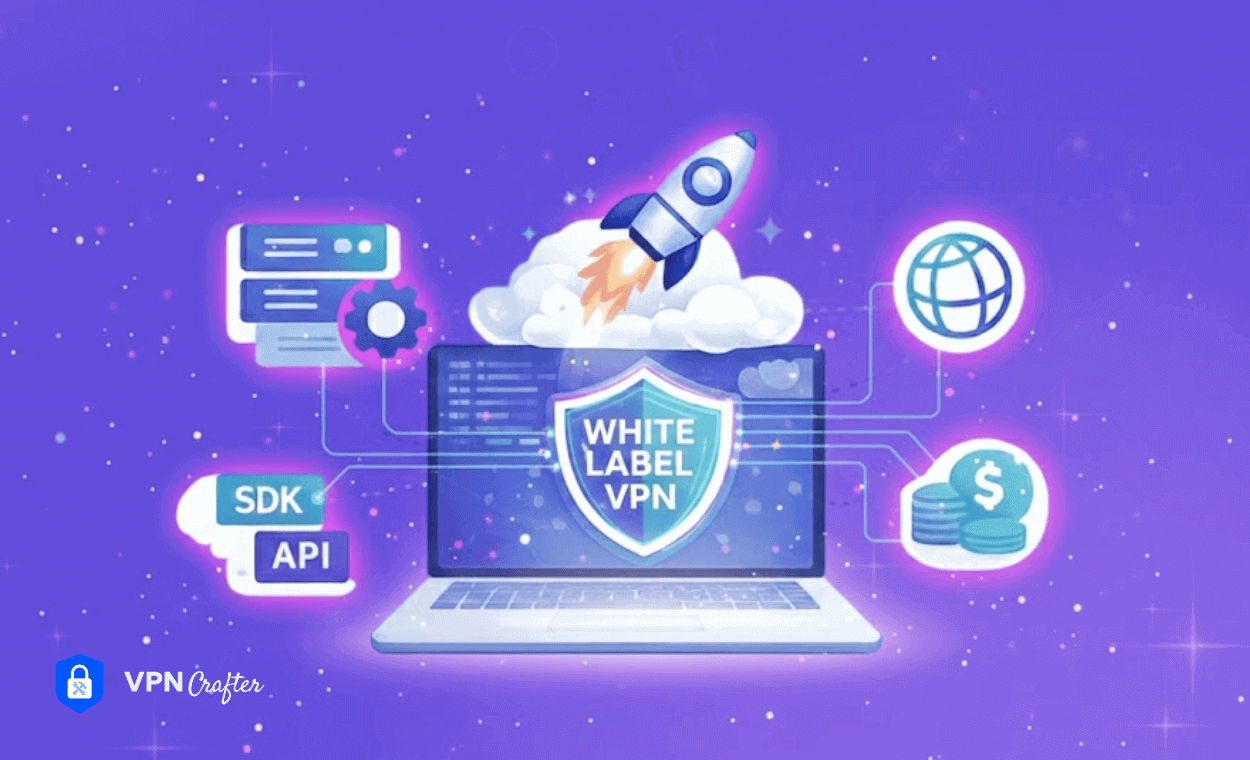
A White Label VPN Development Service provides a ready-made VPN infrastructure that businesses can brand, customize, and sell as their own.
White label means:
- You own the brand identity
- Users see your logo, name, and UI
- Subscriptions belong to you
- Pricing and positioning stay under your control
Under the hood, the provider manages servers, tunneling protocols, encryption layers, and uptime.
White Label VPN vs Custom VPN
White Label VPN vs Custom VPN decisions come down to speed, cost, and risk. Custom VPN development offers total architectural freedom but demands high capital, long timelines, and specialized teams.
White label models offer:
- Immediate access to enterprise-grade infrastructure
- Lower upfront investment
- Faster compliance readiness
- Predictable scaling paths
For most founders learning how to start a VPN business, white label wins on survival and speed.
3. Who Should Use a White Label VPN Development Service?
White label VPNs are not limited to privacy startups. Several industries now depend on them.
Influencers and content creators: Audience trust converts better than ads. Launching a branded VPN builds recurring revenue while protecting followers.
Media companies and political organizations: Encrypted access protects sources, journalists, and internal communications.
SaaS founders and digital agencies: Bundled VPN access strengthens retention and increases lifetime value.
Gaming and streaming communities: Private routing reduces throttling and improves connection stability.
Enterprises needing private VPN solutions: Internal traffic isolation without internal DevOps expansion.
Each group benefits differently, yet all rely on the same White Label VPN Solution foundation.
4. Core Components of a White Label VPN Solution
A serious White Label VPN Development Service includes far more than server access.
Backend Infrastructure
- Global server clusters
- Load balancing and failover
- Multi-tenant architecture
Client Applications
- Android and iOS apps
- Windows and macOS clients
- Smart TV and router compatibility
Control Panel
- User authentication
- Subscription management
- Bandwidth and usage analytics
Security Stack
- AES-256 encryption
- Modern tunneling protocols
- DNS leak protection
- Kill switch enforcement
Branding Layer
- Custom UI
- App store-ready builds
- Localization support
This structure defines how white label VPN works in practice.
5. Security and Privacy Architecture Explained
Security credibility decides long-term success. A professional White Label VPN Development Service implements:
- Verified no-logs policy enforcement
- Diskless or ephemeral server setups
- AES-256 encryption with secure key rotation
- Protocols like WireGuard and OpenVPN
DNS protection matters just as much as tunnel encryption. Leaks destroy trust fast. Jurisdiction also plays a role. Data ownership clauses must be clear. Businesses must control user metadata and billing records.
Service-level agreements guarantee uptime and response times. Without SLAs, scaling becomes chaos.
6. Ownership and Control: What You Really Get
Ownership defines brand equity. With a proper white label VPN for business, companies control:
- User relationships
- Pricing models
- Feature prioritization
- Marketing funnels
Admin dashboards provide visibility into churn, retention, and regional performance. Transparent analytics guide smarter decisions. Vendor-managed infrastructure does not mean vendor-owned customers. That distinction separates sustainable brands from disposable resellers.
7. Monetization Models for White Label VPN Businesses
Strong infrastructure enables flexible revenue design. Common Revenue Models for Your White Label VPN Business include:
- Monthly and annual subscriptions
- Bundled access with SaaS products
- Enterprise seat licensing
- Affiliate partnerships
- Freemium onboarding with premium upgrades
Brands that diversify monetization outperform those relying on subscriptions alone.
8. Cost Breakdown: What a White Label VPN Development Service Includes
Costs vary based on scale and customization. Typical components:
- One-time setup and branding fees
- App customization and store compliance
- Monthly infrastructure usage
- Server expansion as users grow
Hidden costs appear when providers lack transparency. Poor documentation, limited APIs, or forced upgrades reduce margins over time.
Clear pricing protects the runway.
9. Time to Market: How Fast Can You Launch?
Speed matters. A mature White Label VPN Development Service enables:
- MVP launch within weeks
- App store submissions without delays
- Immediate subscription activation
Custom feature development extends timelines but increases differentiation. Strategic brands launch fast, then iterate based on user feedback. Knowing how to use white label VPN systems effectively shortens learning curves.
10. Common Mistakes to Avoid When Choosing a Provider
Many failures trace back to early shortcuts. Avoid providers that:
- Compromise encryption standards
- Restrict user data ownership
- Limit server expansion
- Offer weak technical support
- Ignore app store compliance rules
Low prices often hide long-term risks.
11. How to Choose the Right White Label VPN Development Partner
Selection defines outcomes. Look for:
- Proven deployments at scale
- Clear architectural documentation
- Flexible customization options
- Roadmap transparency
- Real case studies
A strong partner supports growth rather than controlling it.
Is a White Label VPN Development Service Right for You?
Brands benefit most when speed, ownership, and scalability matter. White label beats in-house development when:
- Market timing matters
- Technical teams are lean
- Capital efficiency matters
Founders serious about how to start your own VPN brand should treat infrastructure as leverage, not ego. The next step is simple. Evaluate your audience, validate demand, and launch your own VPN brand with systems designed to scale. A White Label VPN Development Service does not replace vision. It removes friction so vision can execute.