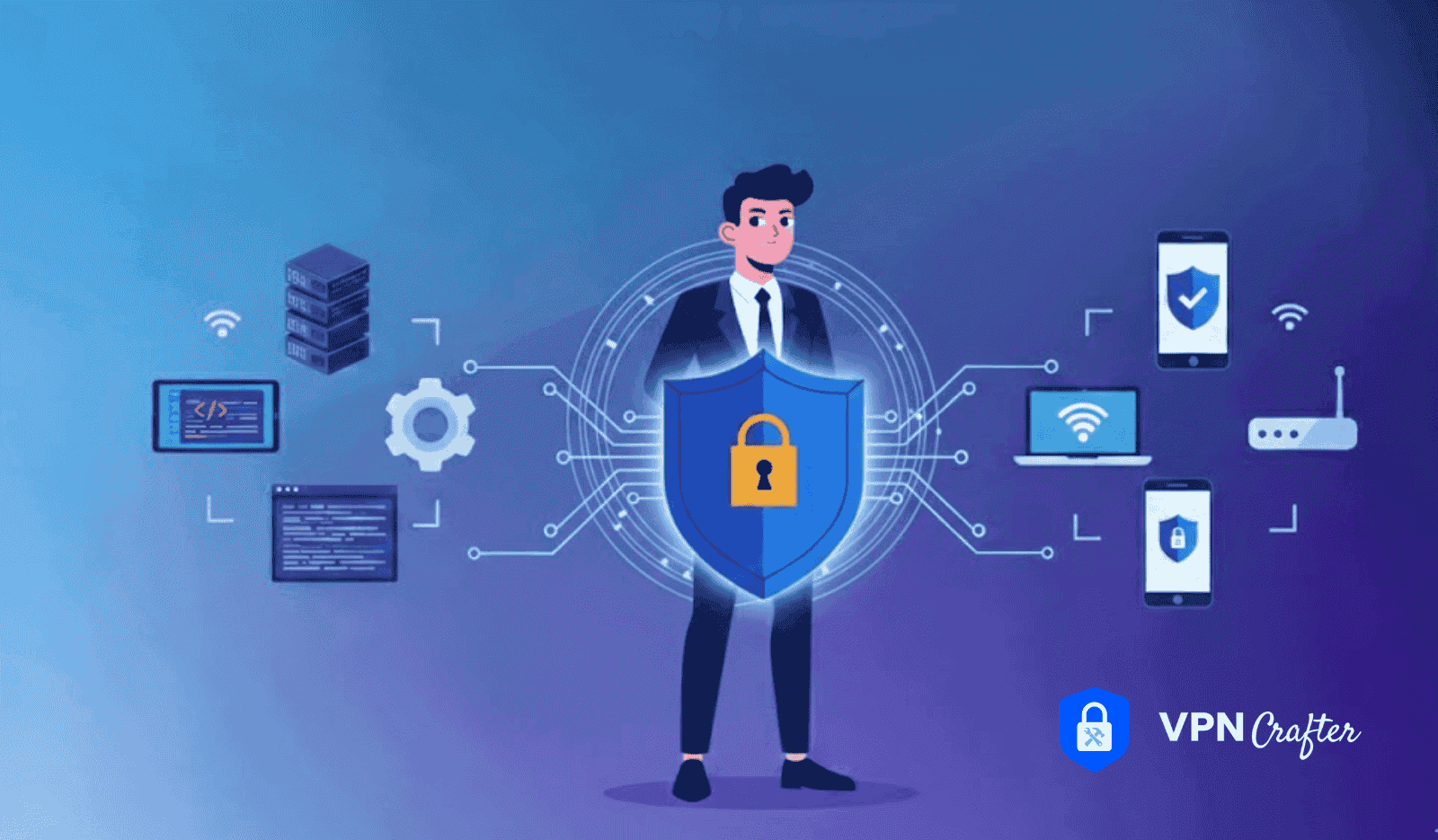


Demand for privacy-first technology is no longer niche. It is structural. Enterprises, gamers, remote teams, and everyday users now expect VPN for Security to be reliable, fast, and invisible in daily use. This shift has exposed a harsh reality across the market.
Many VPN products fail not because of marketing, but because of architecture.
Front-end-heavy VPN apps often look polished yet collapse under traffic spikes, regulatory pressure, or protocol changes. This pattern explains why VPN startups fail even after early traction. Weak backend ownership creates long-term dependency, rising costs, and performance bottlenecks that cannot be patched later.
Full stack VPN app development solves that problem at the root. It gives founders and enterprises direct control over infrastructure, data flow, security posture, and monetization logic. That control reduces operational risk, lowers lifetime cost, and creates a VPN product that can evolve instead of breaking.
What Is Full Stack VPN App Development?
Full stack VPN app development refers to building and owning the entire VPN ecosystem. This includes client applications, backend infrastructure, security layers, billing systems, and operational tooling under one coordinated architecture.
Basic VPN app development focuses on the client side. A polished app connects users to servers owned by someone else. That approach limits flexibility and introduces long-term risk.
Full stack VPN architecture works differently. Backend control becomes the foundation, not an afterthought. Server orchestration, authentication logic, traffic routing, and encryption policies remain fully owned.
This distinction explains why backend control matters as much as app UI. User experience depends on latency, uptime, and routing intelligence. None of those live in the interface. They live deep inside the stack.
Core Components of a Full Stack VPN Solution
1 Client Applications (Frontend Layer)
Modern VPN users expect seamless access across platforms. A production-ready VPN stack supports Android, iOS, Windows, macOS, and TV platforms without fragmented behavior.
Strong UX focuses on speed, clarity, and trust. One-tap connect, smart location selection, and transparent connection states reduce friction. Subtle details like reconnect behavior often decide retention.
Platform compliance cannot be ignored. Apple demands strict privacy disclosures. Google enforces background process limits. Microsoft prioritizes system stability. Each platform shapes how VPN apps must behave.
2 VPN Backend Infrastructure
The backend defines whether a VPN survives growth.
Authentication systems manage users, devices, and sessions at scale. Server orchestration distributes traffic intelligently instead of flooding popular regions. Load balancing ensures that one country’s outage does not cascade globally.
Multi-tenant infrastructure enables scaling without duplicating environments. This capability becomes critical for White Label VPN for Business models, where multiple brands share the same backbone without sharing data.
3 Security and Encryption Layer
Security is not a feature. It is the product.
Strong VPN stacks support OpenVPN, WireGuard, and IKEv2 based on device and network conditions. AES-256 encryption remains the industry benchmark when paired with proper key rotation.
Kill switches, DNS leak protection, and encrypted tunneling prevent silent failures. Many VPNs lose user trust because traffic leaks during network transitions. Full stack ownership allows these issues to be fixed permanently.
Backend Architecture for Scalable VPN Apps
Scaling from 10,000 to 100,000 concurrent users exposes every shortcut taken earlier.
Full stack VPN app development enables geographic server distribution with intelligent geo-routing. Traffic flows to the nearest low-latency node instead of congested hubs. Bandwidth allocation adjusts dynamically based on demand.
Monitoring and logging policies require balance. Enough visibility to maintain uptime SLAs, yet minimal data retention to respect privacy commitments. Enterprises demand this clarity when evaluating Enterprise VPN solutions.
Full Stack VPN App Development Workflow
Serious VPN products begin with threat modeling, not design mockups. Risk assessment defines protocol selection, logging policy, and data boundaries. Backend-first planning follows. APIs, authentication, and routing logic come before UI polish. Client apps then integrate cleanly instead of compensating for backend gaps.
Security testing validates encryption integrity and kill switch behavior under failure scenarios. Performance benchmarking ensures consistent throughput across regions. Deployment is not the finish line. Ongoing maintenance includes protocol updates, OS compliance changes, and infrastructure tuning.
Full Stack VPN vs White Label VPN Development
The debate around White Label VPN vs Custom VPN often misses nuance. Full stack VPN app development suits teams building a long-term proprietary platform with internal expertise. It offers maximum control but requires a higher upfront investment.
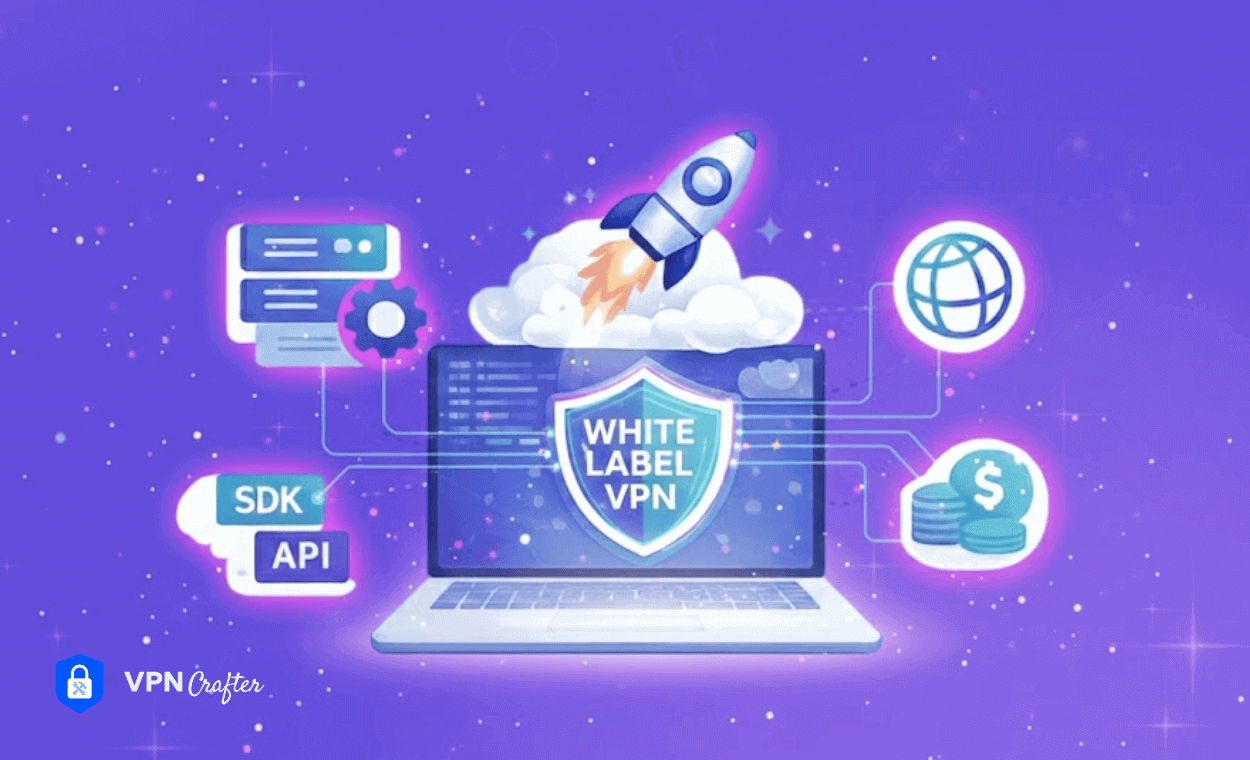
A White Label VPN Development Solution suits faster market entry. Infrastructure, protocols, and apps are prebuilt, allowing brands to launch quickly. Ownership defines the difference. Full stack grants full data and infrastructure ownership. White label offers controlled abstraction.
For startups testing demand, white label VPN development for startups reduces risk. For mature teams, custom stacks unlock differentiation.
Monetization and Business Readiness
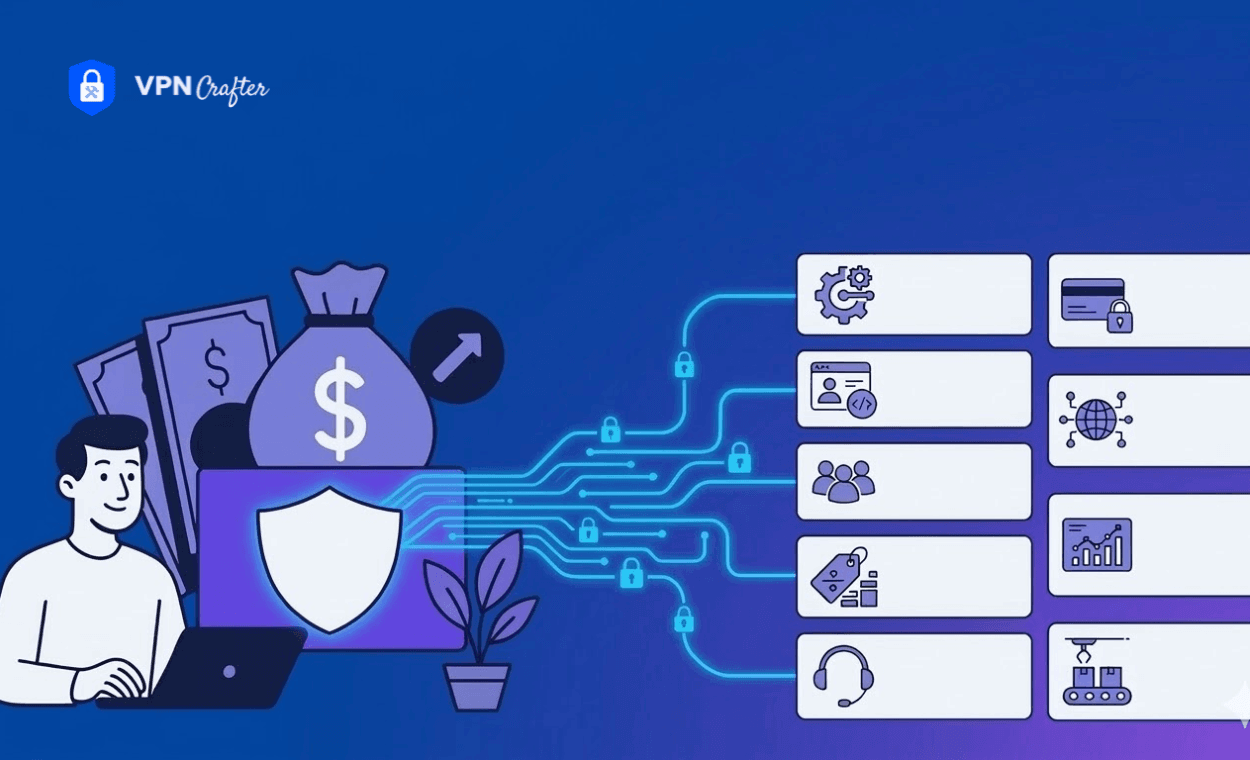
VPN monetization extends beyond subscriptions. Tiered plans, device limits, regional access, and speed profiles drive ARPU. B2B offerings unlock enterprise contracts and reseller programs.
Backend readiness supports billing automation, user lifecycle management, and analytics. These systems enable Revenue Models for Your White Label VPN Business without manual overhead. This readiness also positions brands for acquisition or expansion.
Common Mistakes in Full Stack VPN App Development
Many failures repeat predictable patterns. Backend scalability gets underestimated. Encryption is implemented without proper key lifecycle management. Shared servers introduce performance volatility.
Platform compliance arrives late, forcing rushed fixes. These mistakes explain why many VPN products disappear quietly within two years.
Who Should Invest in Full Stack VPN App Development?
Founders building a durable VPN brand benefit from full stack control. Enterprises deploying private access models require backend ownership. Media platforms, gaming communities, and regulated industries need predictable performance and strict security boundaries.
Governments and NGOs demand infrastructure transparency and compliance readiness.
Choosing the Right VPN Development Partner
A capable VPN development company understands networking, security, and scale. App-only teams rarely qualify. Ask about protocol support, server orchestration, and compliance experience. Evaluate their stance on logging policies.
Avoid providers that obscure infrastructure ownership or resist audits. Buyer intent decisions hinge on these details. This evaluation matters deeply for white label VPN for business buyers seeking long-term stability.
Future-Proofing Your VPN Product
Protocol evolution continues. Post-quantum encryption research accelerates. AI-driven traffic optimization improves routing efficiency. Regulatory pressure increases globally. Prepared VPN stacks adapt without emergency rewrites. Full stack ownership makes this adaptability possible.
Conclusion: Is Full Stack VPN App Development Worth It?
Control, scalability, and security define long-term success in the VPN market. Full stack VPN app development delivers all three when executed correctly. Teams ready to invest in infrastructure ownership should move forward now. Others may begin with White-Label VPN Development while validating demand.
Brands that prioritize transparency, performance, and user trust tend to outlast trends. Platforms built with care quietly earn loyalty.
That philosophy aligns naturally with how Cure VPN approaches architecture, security, and growth. Experience shows that strong foundations outperform aggressive promises every time.