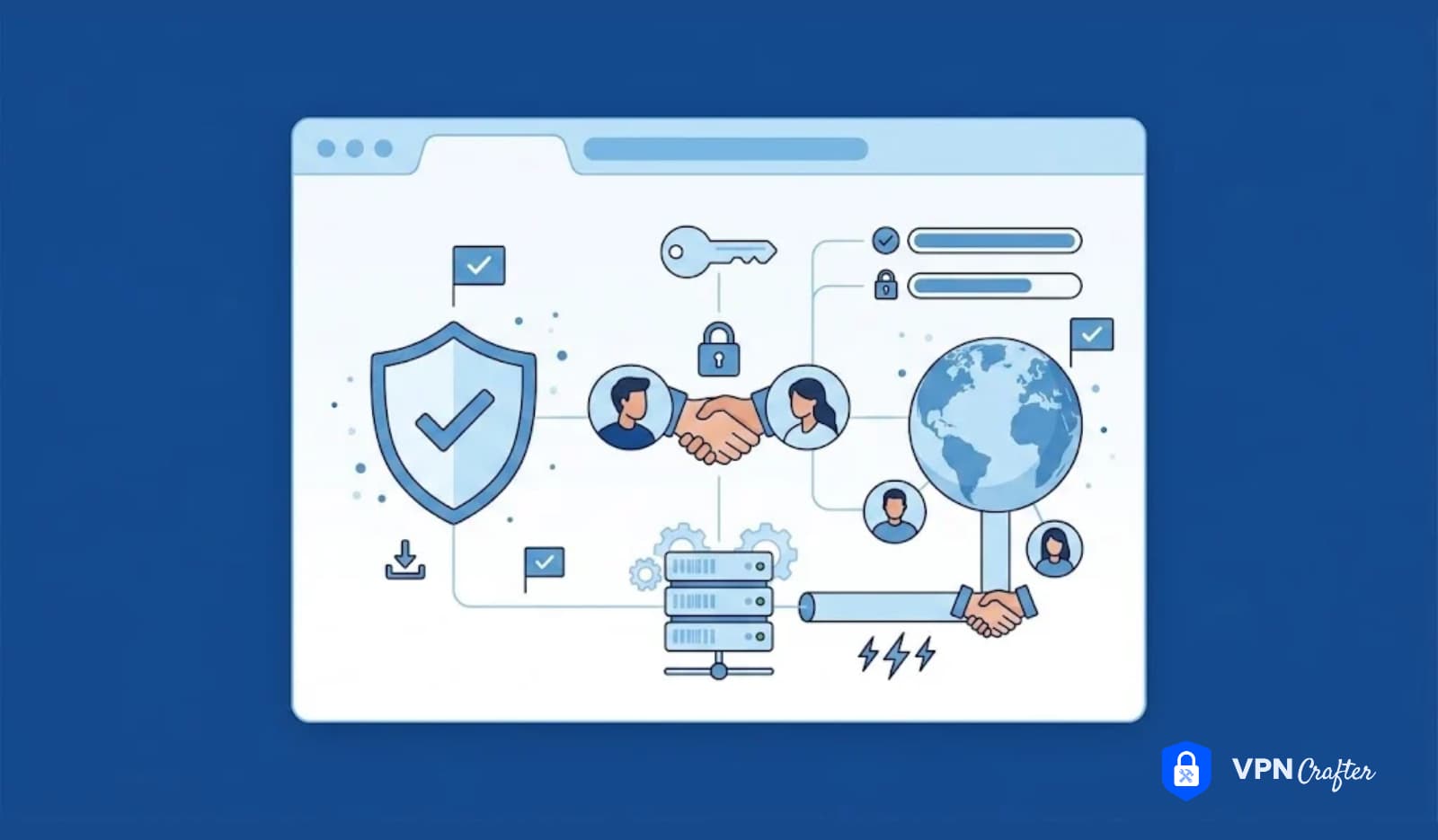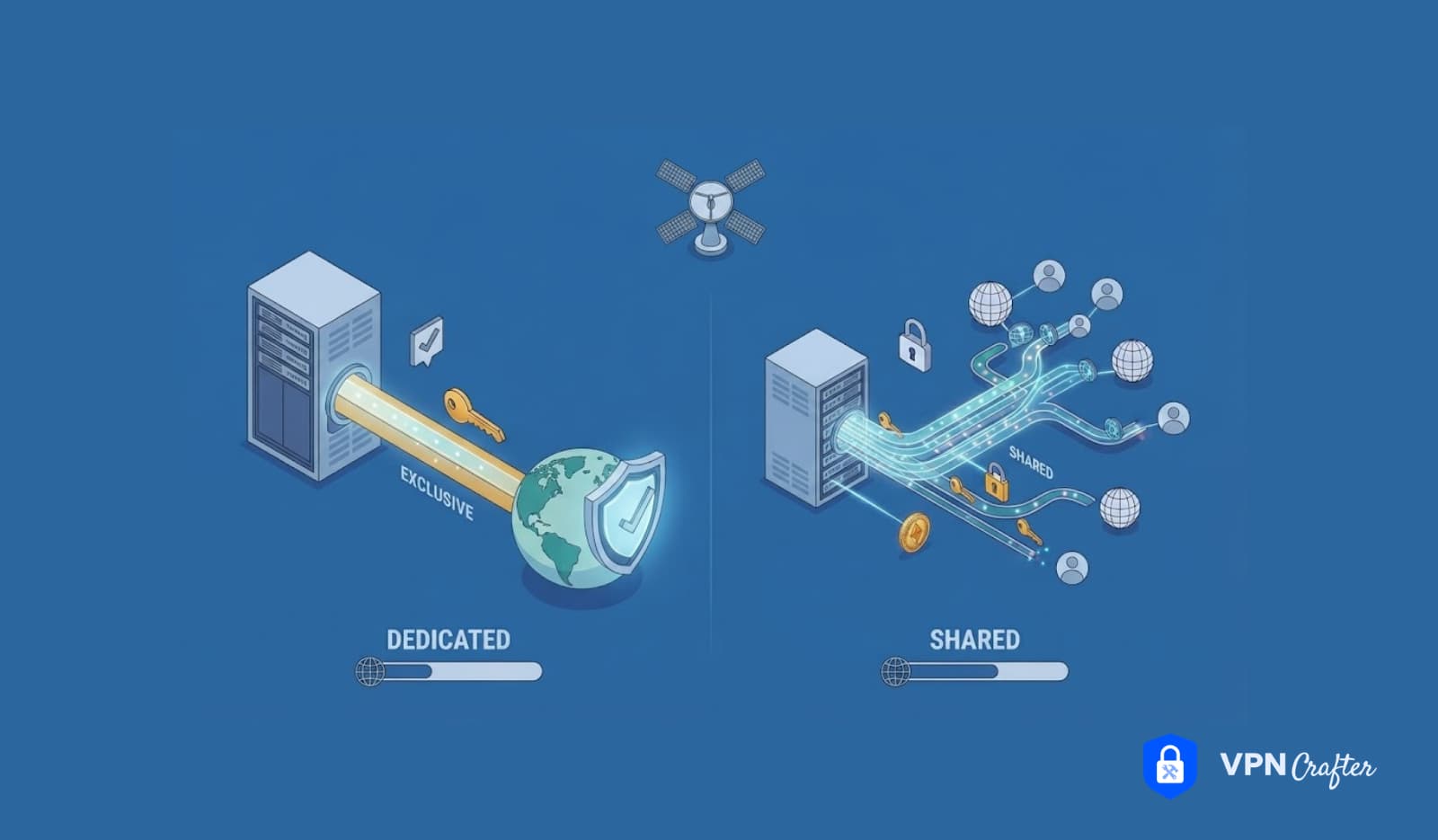


A VPN backend is not a typical web application. Every connected user maintains a persistent, encrypted tunnel. Traffic flows continuously. CPU, memory, and bandwidth are consumed in real time. Scaling is not about page views. It is about sustained load.
This is where many early-stage VPN projects fail. They apply SaaS scaling logic to a networking problem and underestimate the cost of encryption, routing, and session management.
Any VPN development solution designed for scale must treat the network as the product, not just the interface.
Core Architectural Principles for High-Concurrency VPN Systems
Stateless Control, Stateful Data Plane
The biggest mistake in VPN backend design is tightly coupling control logic with traffic handling. At scale, these must be separated. The control plane handles:
- Authentication
- Session orchestration
- Server assignment
- Policy enforcement
The data plane handles:
- Encrypted traffic
- Packet routing
- Throughput optimization
Stateless control services allow horizontal scaling. Stateful data planes remain lean and optimized for packet flow. This separation is non-negotiable when supporting large user volumes.
Load Distribution That Actually Works Under Pressure
Traditional load balancers are insufficient for VPN workloads. Effective VPN load distribution requires:
- Geo-aware routing
- Capacity-based server assignment
- Real-time health scoring
- Connection stickiness without overload
Users must be assigned not to the nearest server, but to the server with available encryption capacity. This requires continuous telemetry from all nodes and intelligent routing logic. This is one of the key advantages of working with an experienced vpn development company rather than assembling infrastructure ad hoc.
Authentication at Scale Without Bottlenecks
At 100,000 concurrent users, authentication becomes a silent killer. Centralized authentication systems introduce latency and single points of failure. Modern VPN backends use distributed authentication with short-lived tokens and edge validation.
Key practices include:
- Token-based auth instead of session-based auth
- Regional auth validation
- Aggressive caching with strict expiry
- Graceful fallback for transient failures
This architecture supports both White Label VPN for Android and white label vpn for iOS clients without platform-specific bottlenecks.
Encryption Performance and CPU Economics
Encryption is expensive. At scale, it defines your cost structure. High-performance VPN backends:
- Use modern protocols optimized for speed
- Leverage kernel-level networking where possible
- Offload encryption intelligently
- Avoid unnecessary packet inspection
Choosing the right cryptographic primitives is not just a security decision. It is an economic one. Efficient encryption directly impacts margins, especially when building Revenue Models for Your White Label VPN Business that depend on predictable infrastructure costs.
Database Design for VPN Metadata, Not Traffic
A scalable VPN backend never stores traffic data. What it does store is metadata:
- User sessions
- Device associations
- Usage counters
- Billing states
This data must be:
- Write-optimized
- Regionally replicated
- Consistent enough for billing, but tolerant to delay
Event-driven pipelines outperform transactional databases at this scale. Metrics flow forward. Decisions are eventually consistent. The system stays resilient.
Monitoring What Actually Matters
Most VPN failures are not sudden. They are gradual. Effective monitoring focuses on:
- Session establishment time
- Packet loss rates
- Encryption CPU saturation
- Server-level queue depth
- Regional congestion patterns
Dashboards built for marketing KPIs are useless here. Operational telemetry is the difference between proactive scaling and reactive outages. This is where VPN for Security intersects with reliability. A secure VPN that is unavailable is not secure at all.
Multi-Platform Scaling Without Fragmentation
Supporting White Label VPN for Android and white label vpn for iOS at scale introduces subtle differences in behavior, reconnect logic, and background execution. The backend must:
- Normalize client behavior
- Enforce consistent policies
- Handle reconnect storms gracefully
- Avoid platform-specific hacks
A unified backend architecture ensures that scaling one platform does not destabilize another.
Cost Control Is Part of Scalability
Supporting 100,000 concurrent users is not just a technical challenge. It is a financial one. Efficient architectures:
- Scale horizontally without linear cost growth
- Allow selective feature gating
- Enable differentiated pricing tiers
- Support multiple monetization strategies
This flexibility directly enables advanced Revenue Models for Your White Label VPN Business, including enterprise licensing, usage-based billing, and bundled offerings.
Why Scalable Architecture Is a Competitive Advantage
Most VPN users never see backend architecture. They feel it. They feel it when:
- Connections are instant
- Speeds are stable during peak hours
- Apps do not randomly disconnect
- Support tickets decrease instead of increasing
Scalability is not invisible. It is experienced. For any white label VPN development project aimed at long-term growth, backend architecture is the product beneath the product.
Final Thoughts: Scale Is a Decision, Not an Outcome
VPN systems do not accidentally scale. They scale because decisions were made early about separation of concerns, infrastructure ownership, observability, and cost control.
If you plan to support tens of thousands of users, design for hundreds of thousands. Architecture is easier to build once than to retrofit under pressure. The VPN brands that dominate tomorrow are being engineered today.